Tweetorials: Why they may still be worth it

There is something quietly subversive about unfolding an idea step by step. I asked Tony Breu, who helped shape tweetorials as a genre, what it is that still makes them special.

It’s like birdsong fading at the end of summer. You didn’t really notice it disappear, but then it just has.

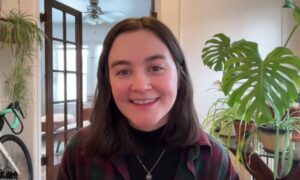
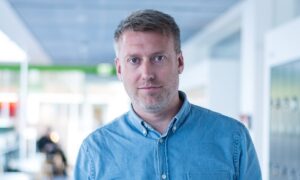
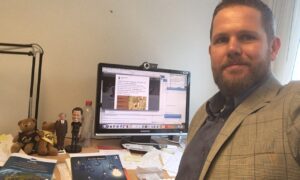
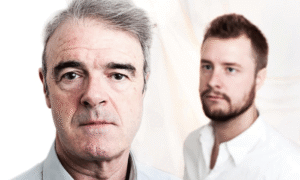
Tony Breu of Harvard Medical School has written more than 130 tweetorials on medical topics

With the migration from X/Twitter to other platforms, fewer scientists seem to be posting tweetorials, and that is a pity.  Tweetorials work well on newer platforms like Bluesky (by design) even if people call them something else. But fewer scientists seem to be daring to invest the time to write them. As newsfeeds on content-sharing platforms like LinkedIn are overrun by AI-generated slop, it might be time to revisit the good old tweetorial.

Perfect for scientists

So what are they, actually?

Tweetorials are a string of tightly written, connected tweets that question or explain something complex, with each of the tweets retweetable and potentially the start of a new sub-thread, drawing the curious reader downwards and setting off new scientific conversations. You can see an example of the start of one on the image below.

For a few years, tweetorials seemed to be everywhere.

On Twitter, they were ideal as introductions to a research topic, and scientists typically pinned tweetorials explaining their own research at the top of their profile, effectively making the perfect introduction to a first-time visitor to their profile.

As a genre they don’t play well with the platforms that want you to share one-off pieces of ‘content‘ (like LinkedIn) that then algorithmically compete for readers’ attention. But this is a good thing. They are for works of art, made for long-term consumption. Refreshing.

If you’re able to engender an interest in just a few small parties who have more of a following than you, then it has the ability to explode

Tony Breu

They were invented by the users: Microblogging platforms like the old Twitter had character limits to encourage brevity. Users went beyond the imposed character limit by threading multiple tweets together as threads. Tweetorials, a sub-genre of these threads that acted as ‘tutorials’, were a genre of threads then subsequently invented by scientists.

Tweetorials are a perfect fit for science.

They can be structured like tight versions of academic papers, with a question, leading to a methods section, a discussion, and a conclusion. This meant that academics could easily reformulate already existing papers as tweetorials.

Also, because each of the underlying tweets can be discussed and commented, they often start new conversations, with an original tweetorial leading to several separate chains of comments and new ideas.

The maestro of med threads

The format invokes scientific curiosity in the reader, teasing them with a short research question, and inviting them to follow along a thought process tweet by tweet.

Some researchers even post them as slow threads, one post at a time with a delay, allowing the reader to follow a researcher’s work in real time.

Each of the underlying tweets in the tutorial thread can be commented, and retweeted, sometimes setting off new discussions.

If anyone is at the centre of the tweetorial genre it is Tony Breu, Assistant Professor at Harvard Medical School. He has written more than 130 of them.

His tweetorials were consumed, argued and commented by doctors, nurses, pharmacists, students, and researchers from other fields. They have titles like ‘Charles Joughin, chief baker on the Titanic, who survived for two-plus hours treading water in the frigid Atlantic Ocean after the ship had sunk’ to ‘Have you ever wondered why we don’t use steroids to treat acute pancreatitis (AP)? I have!’

So when I started my book on Social Media For Research Impact with Marcel Bogers, I leapt at the opportunity to interview him.

Tony Breu posted his first tweetorial in 2018, he recalls.

“So I had thought about this question in the shower the day before and it was really gnawing at me: Why does someone’s hematocrit, the concentration of red blood cells decrease, when they have an acute bleed? When you’re bleeding you bleed whole blood, so the concentration of hemoglobin shouldn’t change”.

“I thought, let me sit down at my computer in front of the TV and throw together something with no expectation that anyone was going to be interested. At that point, I had a few hundred followers at most. But if you’re able to engender an interest in just a few small parties who have more of a following than you, then it has the ability to explode,” he says.

It did.

In fact, he told me, it turned out to be the most popular thing he’d ever done.

100s of tweetorials later, he has a mass following on X. His new account posting tweetorials on Bluesky already has a large following there also.

A tweetorial for him would take six to ten hours to make. To give you an idea of the process he has written a tweetorial (my favourites!) on how to write tweetorials here and here.

“I’ve never measured how long it took me to produce a tweetorial. But for a typical one that I’ve written over the last few years, I will download 50-100 academic articles, and read in detail at least 10 of those, So just the research component can take, let’s say, three to five hours. The actual construction of the tweetorial doesn’t take as much time in 2025, but certainly two to three hours,” he tells me.

This is a significant time investment. But they are widely reposted, commented and read. And in Tony Breu’s case, they have had a real impact in the world.

What a tweetorial wants to do is use a medium that is specifically geared towards quick consumption, like X or Bluesky, and do something with it that is the exact opposite, which is demand people’s attention for five to 10 minutes.

Tony Breu

In one tweetorial, for example, Tony asked why corticosteroids weren’t used in cases of pancreatitis. The thread caught the attention of a critical care doctor he had once worked with, who decided to launch a randomised trial to test the idea. The trial is still ongoing.

Some of Tony Breu’s tweetorials got hundreds of thousands of views, and his latest ones still get a lot of attention.

But tweetorials may be declining as a genre. And this is not solely a result of the decline of Twitter/X as a platform for scientific ideation, although this is a factor. There is a paradox at the heart of the tweetorial, according to Tony Breu:

“By definition, what a tweetorial wants to do is use a medium that is specifically geared towards quick consumption, like X or Bluesky, and do something with it that is the exact opposite, which is demand people’s attention for five to 10 minutes.”

Trying to replicate what we do in tweetorials with TikTok, that is just not going to work. That’s impossible

Tony Breu

Tweetorials were, in effect, a way in which academics revolted against the constraints of the platform. This then turned out to be an enticing way of sometimes driving scientific curiosity towards scientific problems.

I (Mike) interviewed Tony Breu as part of research for my book on Social Media For Research Impact which is co-authored with Marcel Bogers.

“I don’t anticipate a rejuvenation. I don’t think we’re going to get back to where we were,” says Tony Breu. “There’s probably going to be some other way that people do this work that isn’t the tweetorial. These model may work, continue to work in the future. But trying to replicate what we do in tweetorials with TikTok, that is just not going to work. That’s impossible.”

Wonder, not word salad

Generative AI can now produce a post, as ‘content’, faster, cleaner, and more impersonally than ever. This will speed up the actual posting process, even for something like a tweetorial. But this will prove to be the downfall of content-sharing platforms, if newsfeeds turn into a long queue of AI slop.

Tweetorial was, after all, never just ‘content’. It was a process and the reader could see it. You can automate a summary, but you can’t automate curiosity.

Tony Breu also has some of his recent tweetorials on Bluesky.

Tony Breu is currently taking a break from tweetorials. He is writing a book with Avraham Cooper called Why Doesn’t Your Stomach Digest Itself?

“It’s about human resilience and about how the body is able to withstand a constant barrage of things that are trying to put it awry, but also how in even extreme situations, humans are able to maintain themselves,” he explains.

Tony plans to write tweetorials again once his book is finished. “If a hundred people read it instead of a hundred thousand, that’s fine,” he told me. He does it also for his own sake:

I’ve come to terms with the fact that when I put these together, the main learner is me

Tony Breu

Tweetorials, as a genre, have jumped to Bluesky. Here is an screenshot of the top of one from Jorge Morales.

“I hate to say it, but a typical tweetorial, if I were to take one of them three months later, and I had the option to interview all the people who had read it from the first tweet till the end, I bet you most of those people would not remember very much from it.“

“Even I, three months later, may only remember 80% of it! But that’s okay. I’ve come to terms with the fact that when I put these together, the main learner is me,” he says.

“Anyone else who learns is just gravy.”

You can see a full list of Tony Breu’s tweetorials here.

Tony Breu is also co-host with Avraham Cooper on the medical podcast The curious clinicians.

Social media for research impact is a new book by Mike Young and Marcel Bogers (forthcoming January 2026). It invites you to think more clearly — and ethically — about how to use social media. Not just to disseminate your research, but to connect, ideate, co-create, and stay open to the unexpected. The book page is here.

Ice sheet or ice shelf: What’s the difference?

How a glaciology paper got pulled into the climate wars — and what you can learn from research that went viral for all the wrong reasons

I talked to Julia Andreasen while doing research for our book ‘Social Media for Research Impact’ which I wrote with Marcel Bogers (to be released by Routledge in January 2o26).

Julia Andreasen is a postdoc at the University of Alaska Fairbanks

Julia, who is now a postdoc at the International Arctic Research Center, University of Alaska Fairbanks, co-authored a paper in The Cryosphere in 2023 showing that more Antarctic ice shelves had grown than retreated between 2009 and 2019. It was a small, careful study, meant to fill a narrow data gap, and based on work she and her co-authors (Anna Hogg and Heather Selley) did during her master’s. But it got swept up in the larger climate debate after a single sentence from the abstract was lifted out of context and reframed by climate skeptics as evidence against global warming.

On Twitter (now X) everything bled into everything else.

In the abstract of the paper, she and her coauthors had written that more ice shelves were advancing than retreating in the period they studied. It was a descriptive observation, not a climate claim. But the sentence was seized upon by climate change skeptics.

Just to be clear: Ice shelves float on the ocean and respond quickly to winds, snowfall, and iceberg calving. Ice sheets, by contrast, are grounded ice that can melt due to climate change and raise sea levels. On Twitter (now X), the distinction between the two terms got blurred. ‘Shelf’ became ‘sheet’. A carefully worded scientific paper became a talking point in a viral pile-on.

If there were actual questions to our study, then I did reply, but I would never hear anything back

Julia Andreasen

“We are trying to understand climate change, but not everything that we discover is necessarily going to directly equate to climate change as we are looking at a short snapshot. In one way, this is what makes the field so interesting in the first place,” says Julia Andreasen.

She recalls the moment the online storm hit her personally: “I was in the car on the way home from a memorial service… and I just started getting pings and pings and pings.”

Tweets and notifications then spilled over into emails asking for answers. Julia tried to stay away from X, “but on email… if there were actual questions to our study, then I did reply, but I would never hear anything back,” she says.

On social media, “a master’s student I don’t know personally went to bat for me, like he was defending our team and replying to so many of the tweets and getting into the arguments online. I remember messaging him and telling him that what he was doing was so kind,” Julia recalls.

Julia Andreasen has written up her recommendations so that scientists in politicised fields can prepare.

Their small-scale study of a narrow data gap was, for a short moment, the focus of controversy on climate change.

In our book we refer to the term ‘context collapse’ when a social media post that was originally intended for a specific audience is exposed to other unintended audiences. It leads to misinterpretations when the context — or background knowledge — doesn’t travel with the shared post or image.

Knowing that this happens, trolls or campaigners who have particular political agendas, may use this phenomenon to deliberately share texts or images in their context to forward a particular agenda. They typically monitor social media posts or new papers for combinations of keywords — and then have a social media routine where they respond to, and share posts with these keywords in their context for the purpose of ‘owning’ a debate on a social media platform.

I truly thought that I was the only person to ever experience this. I felt like they were using me as a way to say that climate change isn’t real

Julia Andreasen

Context collapse can happen in any field, but deliberate manipulation happens typically in politicized fields (like glaciology in a climate change context). Julia’s study may have been the victim of this.

So what happened?

At the height of all the tweets and replies, Julia was doing her preliminary exams for her PhD.  Luckily, her supervisor explained to the committee what was going on, and this in itself became the subject of discussion.

Ice sheets are grounded ice, as illustrated here on Antarctica (NASA Goddard’s Scientific Visualization Studio, Public Domain)

Other, more seasoned, scientists also chipped in around this time with the advice that Julia should focus on her upcoming field work and not to let herself get sucked into “this sort of black hole that the internet has created,” she says.

“I truly thought that I was the only person to ever experience this. I felt like they were using me as a way to say that climate change isn’t real. And that felt pretty awful. I didn’t feel like I had any voice and so I felt very small compared to the loud voices in the space.”

“But everyone in our community was supportive. And I think that was that really was revealed to me when fact check articles came out, because there were other scientists in my community responding to that and providing additional information.”

After a while, of course, the whole outburst of controversy died down as these things do. It is impossible to gauge its effect, if any. No-one knows whether the storm on X ever really moved anyone towards climate skepticism or whether it just made the critical tweeters look naive. The only thing we know is that original article was recognized by science news site Carbon Brief as having the highest Altmetrics score ever among their climate paper reviews. Altmetrics track how research is shared and discussed online.

This is an ice shelf, specifically, the Ross Ice Shelf in 1997 (NOAA Corps Collection – public domain)

The paper’s high score is likely a result of the controversy. If anything, it might have incited curiosity for the science behind glaciology among those who are genuinely interested.

Julia Andreasen has written up her recommendations so that other scientists can prepare in an article in EOS which can be read here.

Julia Andreasen’s advice:

  • Anticipate potential misunderstandings or deliberate misinterpretations in article abstracts.

To me she says “I think I would frame it differently now. I would add a sentence right up in the abstract like: ‘This does not provide a basis for conclusions about climate change.'”

We are told to just grind out the science, and … leave it to others to make it accessible. But I feel there needs to be more education for the cases where science jumps over the line

Julia Andreasen

“We have figures in there showing all the different ice patterns that we’ve defined. And so I, in another world, would have said ‘we found six different patterns of ice growth and retreat’ and that’s it. And nothing about how many are growing versus how many are retreating. Or if we had put that in there, maybe say, however, this does not say anything definitive about climate change.”

This small addition could have helped set expectations for anyone reading with curiosity—or for journalists scanning for headlines, she says.

  • Only selectively debate with deliberate misinformers—not all misinformation is worth addressing. Work with fact-checkers and journalists to reframe discussions instead.

This is in line with what we recommend in our book. Finding out exactly whether you are debating with people who are in good or bad faith, is the first step. In our book we propose a four-step system to adjudicate if, when, and how, to respond if you ever get into a situation like Julia Andreasen. The first step is to evaluate the critic. And not all of them are deserving of your energy.

Landsat Image Mosaic of Antarctica team (NASA – public domain)

But being selective about who you debate with, also means that you should ‘show up for your science’ in terms of news media, according to Julia Andreasen.

“My coauthors and I chose to engage with reporters who were willing to fact-check and refocus the discussion,” Julia writes in the EOS article. “Working with journalists can reframe your science in accessible language to enhance its impact and foster public understanding”.

According to Julia, scientists should not just churn out academic papers for their peers. They need to be aware of how a paper will be interpreted in a non-scientific or non-field-specific context.

“We are told to just grind out the science, and then we should leave it to others to make it accessible. But I feel there needs to be more education on our side in terms of the communication of science, just for the cases where science jumps over the line”.

Social media for research impact is a new book by Mike Young and Marcel Bogers (forthcoming January 2026). It invites you to think more clearly — and ethically — about how to use social media. Not just to disseminate your research, but to connect, ideate, co-create, and stay open to the unexpected. The book page is here.

LinkedIn and social media networking — course for health science PhD students

A practical, hands-on workshop in health science networking and communication via LinkedIn and other social media platforms. 

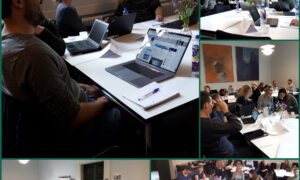
The course will be held in the new Maersk Tower at the Faculty of Health and Medical Sciences, University of Copenhagen. (Image with permission from Instagram user @Dead_Lab

This PhD course at the Faculty of Health and Medical Sciences in Copenhagen is free of charge for PhD students at Danish universities (except CBS) and for PhD students at graduate schools in the other Nordic countries. You can read more about the course and sign up here.
Scientists within the health and medical sector will find LinkedIn (and other social media platforms like Bluesky) particularly useful:

  • The platforms allow real time access to, for example, patients’ and public perspectives, communities of support, and to advocacy groups internationally — but within a narrow medical specialization.
  • The increased use of visual abstracts and digital formats in communicating research has been helped by the LinkedIn and Bluesky/X scientific community.

There are more details below this short introductory video:

The course is at the University of Copenhagen’s Faculty of Health and Medical Sciences and is open to all PhD students at Danish universities (except Copenhagen Business School) and for PhD students at most graduate schools in other Nordic countries.

A typical ‘visual abstract’. A shareable digital format that has taken off in recent years, particularly in the health and medical sciences.

The course goals

You will:

  • Learn how to use LinkedIn and other social media platforms to support your work and career as a researcher
  • Find a social media routine that fits your personality, daily routine and specific medical specialty
  • See how to be strategic in your use of social media
  • Set up personal routines, augmented by automation, for monitoring news and ideas from specific research areas.

Photo with kind permission of Instagram user @nazanins_daily

The course is relevant for both beginners and experienced users.

“Very ‘hands on’. I will definitely recommend this to other PhD students” —  previous participant

Dates: 11 + 25 March 2026, both days from 09:00 to 13:00

There is more information and you sign up for this course here.

Does your department, faculty or university need to boost its researchers’ international impact? My workshops in social media introduce researchers to the systematic use of LinkedIn, Bluesky, Reddit, X and other specialized social media and tracking applications. All Mike Young Academy workshops are bespoke and custom-fitted to specific scientific fields. Workshops can be held in-person, or online as a combination of video-conferenced live-sessions with group ‘breakout’ rooms, individual feedback, and homework.

Why niche social platforms like iNaturalist matter to science

Forget viral content. Here is a quiet social platform where researcher impact comes from verified observations and open science

For marine biologist Trond Roger Oskars, the niche social media platform iNaturalist has become a vital tool for both research and outreach.

“iNaturalist is a social media where you upload images of animals or other organisms you’ve photographed, and then experts and knowledgeable amateurs give their opinion on what species it is,” Trond Roger Oskars explained to me, calling it the “Twitter for species”.

I interviewed him recently in preparation for the book Social Media for Research Impact that I have co-authored with Marcel Bogers and that is due for release by the publisher Routledge in early 2026. I was interested in Trond’s use of niche platforms outside the mainstream: In the book we advocate for the use of niche platforms with small-scale — but cumulative — impact, and platforms that are designed with other functions in mind, but that have a social media component.

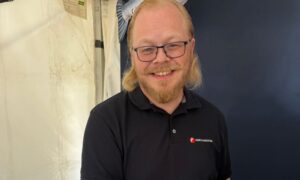
Closest to us on Trond Roger Oskars’ hand is a common sunstar, (crossaster papposus). Behind that is a blood star.

iNaturalist is a site for hobbyists, but its structure is built for scientific contribution. When a species identification receives enough consensus, it’s marked as ‘research grade’ and automatically added to the Global Biodiversity Information Facility (GBIF)  — one of the world’s largest public biodiversity databases.

In other words, what begins as a casual photo taken by a diver or beachgoer can end up as a verified datapoint in an international repository. This is social media acting not just as a tool for research dissemination, but as scientific infrastructure.

For Trond Roger Oskars of the Møreforsking Institute in Norway, the effects are clear in practice: “Recreational  divers are essential for documenting rare species — they often send me images or specimens that I wouldn’t encounter otherwise. If they didn’t go around photographing every small thing, I don’t think the marine field would move forward,” he says.

Trond Roger Oskars’ own research on snails has led to major taxonomic revisions.

The collaborative verification model of iNaturalist makes it possible to integrate contributions from non-researchers into formal science, in near real time.

This is most likely a Diaphana minuta, a species of gastropod found in Europe and North America…

The platform also supports open content use. “I use iNaturalist to get images. Most of the images that are uploaded there are in the public space, or CC BY 4.0,” Trond Roger Oskars says. This makes the platform a valuable source for visual material for presentations, outreach posts, and educational content.

…in this case it was observed by someone off the coast of the US.

What sets iNaturalist apart is how it combines structured data collection with community input — making it both a crowdsourced field tool and a global biodiversity hub. Scientists in remote or underfunded areas, or those working in highly specific taxonomies, can gain access to a distributed community of identifiers and observers.

As a niche medium, iNaturalist, does extremely well what mainstream social media like LinkedIn and Facebook only do well with their Groups functionality, with separated private or semi-private communities based on shared interests. What separates a niche platform like iNaturalist from the Group communities of mainstream social media, is that it is solely focused on what users are on the platform are there to do, with no distractions from newsfeeds cluttered by advertising and influencer content.

Trond Roger Oskars is also active on two Facebook Groups where people upload images, one focused on marine invertebrates, one focused specifically on sea slugs.

iNaturalist and these two Facebook Groups are a supplement to the traditional dive books – printed guides used by recreational divers to help identify marine species in specific diving regions.

…then experts like Trond Roger Oskars helped identify it.

“Usually a diver has just clicked a picture and doesn’t know what species it. So people usually just tag me directly in the groups. They get to learn something new and engage more closely to nature so that’s a bit of fun. A lot of the old dive books are now obsolete. So they have to go to social media to get a correct image, and people are happy that there’s someone that can answer, “ says Trond Roger Oskars. The largest Facebook Group has 60,000 members and includes both diverse scientists, and people who just like the images.

Both iNaturalist  and Facebook groups like this one for sea slug enthusiasts have turned into networks that connect scientists, to divers, to wider publics, according to Trond Roger Oskars.

“It’s really great that they have brought both the people with the specialized expertise and the people with the hands-on experience together.”

Social media for research impact is a new book by Mike Young and Marcel Bogers (forthcoming). It invites you to think more clearly — and ethically — about how to use social media. Not just to disseminate your research, but to connect, ideate, co-create, and stay open to the unexpected. The book page is here.

Researchers are (also) stoking politics on Bluesky. Here is how to avoid it

When researchers migrated from X to Bluesky, the hope was for a quieter space. They wanted less outrage, and more science. But reality is biting back. So here are a few tips to avoid the politics anyway.
Is scientific Bluesky being swamped by US politics?

The posts from influential scientists that are driving ‘engagement’ in the form of likes and reposts on Bluesky is not science. It is political commentary and cultural hot takes – mostly focused on left-of-centre and progressive US politics.

This is according to an analysis of 18,000 posts from influential scientist accounts by my colleague Lasse Hjorth Madsen. He has looked at the highest performing posts in terms of likes and reposts among 200 highly influential science accounts on the platform. Lasse’s post analysis comes after several iterations where he and I (Mike) have jointly mapped out the emerging Bluesky scientific community, finding the most central and influential scientists and research fields on the platform.

Lasse’s latest analysis points to something uncomfortable: Some academics are not just victims of the attention economy, they are active participants in it. And the tone of the posts that spread, mirrors the posts that spread elsewhere online — politics, outrage, frustration, and protest.

The table above shows the most liked original posts (not reposts) among our influential scientists’ group.

Before we go on, I need to both hedge my claims, and try to give an explanation of what is going on:

  • Bluesky, to a much higher degree than other platforms, enables you to set up your newsfeed so that you only see what you are interested in. The most savvy Bluesky users can avoid the politics, and some of them will do so (see my tips below). That is one of the reasons why many scientists are there in the first place.
  • The analysis is based on the top 200 of our ‘most influential’ list, based on centrality measures. This group could be already pre-selected to have centrality because they are already in a non-science politically-oriented community that enables the wider traction. What we see is a kind of circular logic that might not prove anything.
  • When you count reposts of academics’ original posts, all of the reposts are not necessarily coming from academics themselves. On Bluesky, when you repost, it can be shown on your own followers’ feeds. What this means is that a political post from a scientist, could be highly reposted outside the scientific community, then circle back to be seen by other scientists after it has been circling around the political echo chamber gaining likes and reposts from people who want to virtue signal a specific political standpoint.
  • A large part of scientific Bluesky is scientists from the United States, so it is, actually, no surprise that posts about US politics dominate global feeds.
  • Scientists are, in fact, generally mostly left of centre in terms of their politics.
  • Scientists on Bluesky are, to a higher degree, left of centre in terms of politics, precisely because a large group of them have migrated from X after the controversy surrounding the Elon Musk takeover.
  • The group of scientists who get the most likes and reposts is likely hiding a much larger undergrowth of scientists on Bluesky who avoid politics, and are happy to avoid viral hot takes.

We have to be really careful we are not mistaking correlation for causation here. Our analysis does not show that posting political hot takes lead to more reposts or higher follower numbers. Heaven forbid, this will not lead to more understanding and more impact for science. Our analysis just shows that highly central scientists in our group got the most reposts when they did post politically.
The lesson? A new platform doesn’t erase the old dynamics. If researchers want Bluesky to become more than an alternative outrage machine, they will need to make some conscious choices.
What can you do to avoid politics?

So how can we help this along? What do you do if you want to avoid politics in a professional or academic context altogether?

As a first step use the functionality of Bluesky to set up different feeds for different topics and modes of working. If you really want to see the politics, then leave the standard newsfeed that lets you see ‘Following’ (you can see my feed on the image above – the feed that is headed ‘Following’). Otherwise set your front page so that you don’t see following as the first thing.

Now set up feeds with only your interests and lists, and make sure that they show first on your newsfeed.

Feeds can be found on the left

See the hashtag symbol on the left? Click on that.

Lists, like good old X, are sets of people that you want to see the posts from. You can find those by clicking on the little bullets symbol below the hashtag. In my set-up shown above right my list of ‘Danish research institutions’ is showing on number fourth spot. Lists on Bluesky are always public.

There is a good guide on how to customize bluesky feeds here.

Click on the cogwheel

But what you need to know is that you can adjust the front page of your Bluesky, so that the first thing you see on the app or on desktop, is a specific feed with your interest. You don’t have to see the posts from the people you are following before you see your interests. This is a great way to avoid getting ensnared in the politics and hot takes.

As a second step, if this does not work, and this goes for Bluesky just as much as any other social platform: Just unfollow the people who post about the politics. Tough, but they had it coming for them. They won’t get a notification.

Click the arrows to adjust which feeds should show first when you open Bluesky. Adjustments apply to both your desktop and phone versions.

As a third step, you can hide a specific account if you see a political post anyway in spite of your unfollow (someone in your network who follows them might have reposted it, which will then put it on your feed). Just click on the three dots at the bottom of the post to mute this particular person. This is also the place where you can block particular people which stops them from interacting with you.

Fourth step. Bluesky’s starter packs feature lets you follow groups of scientists within your own field. This is brilliant. But be aware that large starter packs may include a number of scientists who post about politics. So a fourth step is to unfollow or mute these specific offending scientists afterwards (back to second step!)

Bookmarked searches are the final resort if you can’t get the feeds to shed out all the politics

Fifth step. Sometimes all of the above is not enough to maintain a non-distracting, non-outrage, non US-politics focussed feed anyway. For many specific tasks I resort to bookmarked keyword searches. Just as an example, this link only shows the Bluesky posts that have the ‘University of Copenhagen’ in them.

I hope this helped!

Do you have any further ideas on how to avoid politics on Bluesky? Let me know in the comments!

Social media for research impact is a new book by Mike Young and Marcel Bogers (forthcoming). It invites you to think more clearly — and ethically — about how to use social media. Not just to disseminate your research, but to connect, ideate, co-create, and stay open to the unexpected. The book page is here.

For scholars, being kind could be contagious

A new paper argues that small, voluntary acts of kindness can ripple through communities, improving mental health. What might this mean for scholars on social media?

It is a good idea for governments to promote voluntary acts of kindness. And it is a good idea to practice being kind yourself, according to a paper by Tri-Long Nguyen and Ji Young Lee, both of the University of Copenhagen.

Practicing kindness can improve mental health and well-being in both individuals and at a societal level. In their paper Kindness as a public health action, they argue that policies that encourage voluntary acts of kindness are practical, cost-effective, and ethically sound.

Their paper was recommended to me recently while I was interviewing sources for our forthcoming book on ‘Social Media for Research Impact’. So I thought, could this be applied to the idea of being a kind academic on social media?

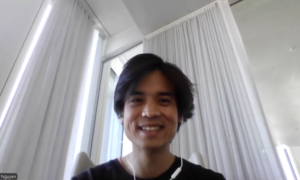
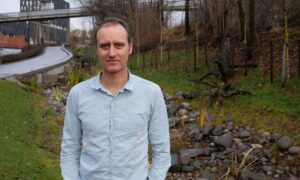
Tri-Long Nguyen (left): In the Buddhist tradition being kind to yourself is not in opposition to being kind to others.

Tri-Long Nguyen is an associate professor in epidemiology with a background in pharmacy, statistics, and education. When he is not doing science, he reads a lot about philosophy and Eastern practices like Zen Buddhism. His work with Ji Young Lee, an assistant professor in philosophy and bioethics, makes the case that being kind is not only a nice thing to do: It is evidence-based good practice.

Algorithm as a kind actor

In their paper they used the preventive medicine framework proposed by Geoffrey Rose in work from the 1980s. He is known for the ‘prevention paradox’: Massively applying to the general population an intervention with small individual benefits is more effective than targeting only those at high-risk of disease. This is because the number of people at high risk is small, so targeting only them would prevent a lower number of absolute cases.

“The biggest mental barrier that people have is the fear that they cannot change the world alone from an individual position”

Just like infectious disease, acts of kindness cascade and multiply, Tri-Long Nguyen and Ji Young Lee argue. And just as in preventing disease, the small individual benefits of cultivating kindness, understanding, love and compassion can collectively generate large-scale social impact by propagating positive effects beyond the initial recipient of the kind actions.

Co-author Ji Young Lee posted about their paper on LinkedIn

In a blog post recently I listed 11 kind habits academics should get into on social media. One of my pet theories is that by doing specific kind practices on social media you are shaping a community around yourself so there is a higher chance of these kind of interactions taking place in the future in your social media vicinity.

This is not just the effect of people copying you. It is because platforms’ algorithms tend to surround you with people who are doing the same types of kind actions, this reinforces the practices as a collective action due to network effects. You are basically creating ripples of kindness, and the algorithms may be reinforcing it. So by practicing kind actions on the social media where scholars are active, you are helping the whole of academia become a kinder place.

Collective conciousness

Our paper “is exactly analogous to this,” Tri-Long Nguyen said when I presented my own pet theory to him on our Zoom call.

“The biggest mental barrier that people have is the fear that they cannot change the world alone from an individual position. But I think that when we change ourself we inspire other people to change themselves as well. We’re not on separate islands and that’s what we try to emphasize in the paper.”

I put it to Tri-Long Nguyen that support for the contagiousness of kindness theory can be found on the Reddit platform. People post here anonymously, on different subreddits, each with a different topic. On many of them, people respond voluntarily to help other people, with no other reward than the knowledge that they are helping others. As they are posting anonymously, there is no reason to believe they are doing it for egoistical reasons or to boost their status.  By responding, they are simply helping their community and at the same time increasing the likelihood that other people do the same.

“The non-action is what we cultivate before we speak, before we write, before we perform an act of kindness”

For Tri-Long Nguyen this type of social media practice, and their own paper, ties in well with his practice of Zen Buddhism. If ‘being kind’ propagates to others, it is a sociological phenomenon that can be analyzed through the lens of ‘complexity theory’ and ‘system theory’. But the Buddhist tradition has, through the course of millennia, had a lot to say about it also. For example how being kind to yourself is not in opposition to being kind to others. We are all, in this tradition, ultimately nourishing and cultivating a same ‘collective consciousness’ that we all ‘consume’. There is no separation between you and me, we are interconnected.

Non-action

I showed Tri-Long Nguyen two slides from a recent social media workshop I did for researchers: The first slide outlines a ‘mindful’ approach to social media platforms that protects your attention span, guards your boundaries, and avoids the constant pressure to perform. The focus is on self-care. The second slide outlines an ‘ethical’ approach to the social media platforms that encourages generosity, openness, and support for others. The focus here is on social media as a channel to fulfil our ethical obligations.

I knew, even before I asked him, that Tri-Long Nguyen would politely dismantle my distinction. Are they basically the same thing?

“Yes they are!” Tri-Long Nguyen responded.

“We cite at the very end of our paper the Zen master Thích Nhất Hạnh. He talked a lot about how when we talk about action, we often think about something concrete, like something to do, write, say, or do physically. But there is another aspect that is non-action. The non-action is what we cultivate before we speak, before we write, and before we perform an act of kindness,” Tri-Long Nguyen said.

“Non-action is in a way already action because it increases our well-being and therefore shapes the way that we cultivate loving speech or loving actions to others. So that’s how I relate the two approaches, mindful and ethical.”

Social media for research impact is a new book by Mike Young and Marcel Bogers (forthcoming). It invites you to think more clearly — and ethically — about how to use social media. Not just to disseminate your research, but to connect, ideate, co-create, and stay open to the unexpected. The book page is here.

What I learned from co-authoring a book

I want to share a few reflections on how co-writing a book has been a powerful experience for me. 

Marcel Bogers and I sent a book manuscript to the publisher recently and our work will be released in a few months time. (No spoilers about the actual book here: I want to stay on message!)

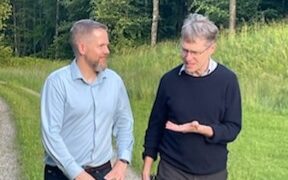
Marcel Bogers (left) and I went for a walk with my family in Grib forest when we had finished the manuscript

This is my first book, and a lot of my previous writing in a professional context has been as a journalist. I have many positive experiences with the collective researching, drafting and writing of journalistic articles and stories. But here, most writing, even nowadays, is as a sole author.  

Efficient, and in control

The way I see it, being the sole author of any piece of writing, including a non-fiction guide like ours, has its advantages:

  • Writing is more efficient, as you don’t have to coordinate with anyone else. You can simply work sequentially: now I work on this chapter, now I work on that.
  • It is written in one tone of voice, and this means that you can spend a lot less time revising to unify this voice once it has been drafted.
  • As sole author you have complete control over the structure, topics, format, and expression.

But co-authoring a book has advantages too. And this was brought home to me the last six months working with Marcel. Collaborating on a book is not just a 1 + 1 = 2 situation. The sum is greater than the parts.

Something new in the world

Having two authors adds something fundamentally different.

Here are the specific advantages that I have thought about in the actual book-writing process:

  • Natality. With two authors, there is a higher chance that something new comes into the world. The discussion in itself leads to new thought emerging that would not have appeared in one of the authors. This reminds me of the concept of ‘natality’ in Hannah Arendt, where being human in a shared space means bringing something fundamentally new into the world.
  • Darlings. In journalism school, you are taught to ‘kill your darlings’. You fall in love with your own ‘cute’ turns of phrase, and you need someone else to take them out. In this work process, I have had many darlings killed!
  • Network. In this type of non-fiction work, you’ll be looking for wide variety of interview sources with insight, experience, or authority. A co-author doesn’t just add volume—they add variety. I have come into proximity with people I wouldn’t normally approach from different disciplines, countries, and platforms.
  • Momentum. Writing a book takes time and you go through bumps and troughs. As co-authors we could take turns to pick up the slack.
  • Blind spots. You bring different assumptions, biases and intellectual traditions to the table. My co-author has shone a light on my own blind spots and made me more self-aware of where I need to learn more.
  • Division of labour. One of you can be good with sources and interviews, another can be good with references and structure. And the funny thing is: you only find out along the way. In this way, we ended up specializing, while at the same time learning from each other.
  • Learning. It deserves another mention. When you write a book with someone else, you don’t just learn more about the topic — you are exposed to practical shortcuts, processes and technological tricks. I got better by working with someone else.

Another way of being human

In one way, I suppose, co-authoring a book is just another way of being human. After all, nearly everything new in the world is the result of a collective endeavour. But writing a book with someone else makes this visible in a way that solo work rarely does.

If you have any thoughts yourself on the subject feel free to write them in the comments below!

Call for experts: Social media for research impact

I (Mike) am writing a book on social media for research impact with Marcel Bogers — an expert on open and collaborative innovation. We appreciate your help!

The book has a working title — Social Media for Research Impact — and will combine the expertise in innovation, technology and entrepreneurship from Professor Marcel Bogers and my own (Mike) practical work experience helping academics and universities boost their impact through social media. It will be published by Routledge and is likely to be released in the autumn of 2025.

We want this to be a collaborative project, and we’re looking for experts, case studies, and stories to enrich the book. Below are some key topics where we’d love to hear from you (or someone that you can suggest to us in your own network)!

What we’re looking for:

The concept of ‘research impact’ and social media

We need experts on the theory of research impact and how social media practices tie into it. This includes the interplay between scholarship, policymaking, and public engagement.

Social media identity and personal branding

We want insights on how scholars build their online presence. Which platforms work best? What strategies succeed? We’re especially keen on case studies of academics that have built a strong online identity.

Increasing research visibility and impact via social media

We need case studies of scholars who’ve used social media effectively. Have you seen great examples of posting techniques, use of infographics, or creative sharing strategies? Let us know!

Customizing your information environment

How do academics use social media to manage the flow of information? If you’ve developed methods for filtering feeds and managing your time online, we’d love to hear about them.

Automation, AI, and social media

We’re exploring the pros and cons of automation for academics: What works well? Where are the risks? We want to hear from people using tools like scheduling apps, chatbots, or AI content recommendations, custom GPTs for content creation, or tools to find related social media posts and accounts.

Navigating the dark side of social media

We need stories and strategies around handling the challenges of social media: Trolling, self-censorship, burnout, and more. We’re particularly looking for case studies from scholars who have social media experience in politicized or controversial fields.

Kindness and generosity in academic social media

We want to explore the positive side of social media. Do you know of scholars who share openly, help others, or spread kindness in academic spaces? We want to hear those stories.

The future of social media for scholarly impact

We’d love to hear your thoughts on the future of social media for research impact. What promising strategies are on the horizon? Which older approaches might be worth revisiting?

We want diverse perspectives

We recognize that Marcel and I bring certain biases to this project: We’re both men, from Western Europe, and embedded in traditional academic culture.

So we’re actively seeking diverse voices — from different cultural, geographical, and disciplinary backgrounds. We want to hear from:

  • Scholars from underrepresented communities
  • Non-academic stakeholders affected by research
  • People in different fields and stages of their careers

Interested?
We’d love to hear from you!

Email me Mike on mike@mikeyoungacademy.dk if you have any ideas.

This is a collaborative intellectual journey — and we hope you’ll join us!

Does your department, faculty or university need to boost its researchers’ international impact? My workshops in social media introduce researchers to the systematic use of LinkedIn, Bluesky, Reddit, X and other specialized social media and tracking applications. All Mike Young Academy workshops are bespoke and custom-fitted to specific scientific fields. Workshops can be held in-person, or online as a combination of video-conferenced live-sessions with group ‘breakout’ rooms, individual feedback, and homework.

Bluesky is emerging as the new platform for science

Scientific Twitter is about to find its true successor. And it is not X. This, our latest release, shows that the Bluesky network of scientists is growing — and growing.

The network of scientists on Bluesky has evolved significantly since our last update, now including 39,030 influential people in the scientific community, a 75 per cent increase over the 22,225 that my good colleague Lasse Hjorth Madsen and I released three months ago.

The total number of academics, researchers and science communicators on Bluesky will actually be much much larger, but this number: 39,030 is is a good estimate of the number of scientists who have a substantial scientist following within the scientific community itself. You can see how influential scientists make it on to our list here.

Lasse Hjorth Madsen (left) and I (right) are still enthusiastic about generating this model of the global scientific network

The growth that we see signals not only a broadening interest among scientists and science communicators for the platform. It also illustrates an increase in interconnections within the community.

No surprises here!

When you as a scientist move to  a new professional social platform, you start to follow people. And it is likely the increase in these followings that also pushes the scientist numbers upwards in our model.

Mapping the big migration

With this update, we’ve incorporated timestamped data showing when each profile joined Bluesky, offering new insights into how scientists migrate across platforms.

Our top 100 list on Bluesky showcases a diverse range of scientists and science communicators on the platform who are particularly influential

A significant increase in sign-ups took place in August 2024, which may correlate with the wave of negative publicity surrounding the owner Elon Musk and the ban of X (formerly Twitter) in Brazil.

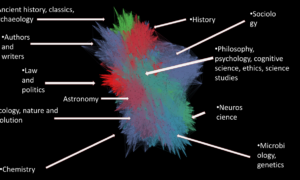
I have labelled some of the communities on this screenshot of the visualization here. Boundaries between research fields are decided by the algorithm. Some fields will be included in other communities.

More recently, the controversy over Elon Musk’s support of Trump in the US election has set off another wave of  migration away from X.

Based on your feedback, we’ve revised our keyword set, expanding it to better capture diverse scientific fields. All scientific disciplines were also represented in the network’s structure in previous releases, but now we are even more certain.

Community boundaries between research fields are decided by the algorithm, and not by us. This means that important fields will in practice be included in other communities.

Within the network, different communities naturally form around certain interests. These clusters are algorithmically determined, and then labeled. However, these labels serve purely as a reflection of network structure and not as judgments on a field’s importance or size.

Just like on other social platforms, Bluesky has a skewed distribution of followers: A few individuals maintain sizable audiences, while most of us have smaller ones.

If a specific area of science isn’t labeled explicitly in our rendering, then it is likely because it is already well-integrated into a related community cluster.

New top 100 scientist influencers

Our top 100 list on Bluesky showcases a diverse range of scientists and science communicators on the platform who are particularly influential in terms of a measure called centrality. More on that here.

As for follower numbers. Just like on other social platforms, Bluesky has a skewed distribution of followers: A few individuals maintain sizable audiences, while most of us have smaller ones.

We meet up regularly in Copenhagen to square off the network analysis details

Since our last iteration, we have seen notable growth in a community labelled as ‘law, science and policy’. This suggests that interest in social science issues may be particularly resonant on Bluesky.

You can get an overview of our methods here.

Our method follows on from my own former TwiLi Index of recent years, which was an alternative measure of scientists’ ‘impact’, based on Twitter (now X) and LinkedIn following numbers.

New network visualization

Click and have a look at Lasse’s interactive visualization here.

We build our Bluesky network by doing this: We start off with a list of hand-picked members of the scientific community. Then we expand the network step-by-step, finding the scientists on Bluesky that they follow, and subtracting those that are not followed by a substantial number from the existing network.

We then use a key term search to subtract those that do not have a bio description that indicates an affiliation with the scientific community. Then we repeat the process again and again, until we are no longer getting substantial numbers of new scientists.

We compute centrality measures like ‘betweenness centrality’ and ‘PageRank’ to identify members that may be particularly influential.

Explore the network

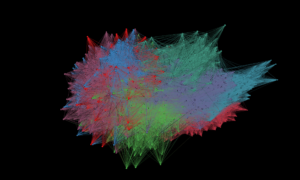
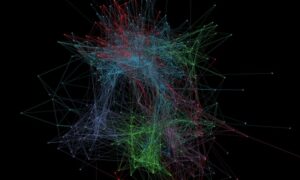
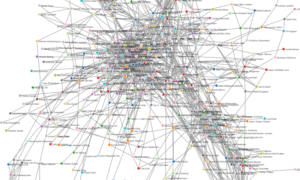
We encourage you to play around with our network visualization tool, where each node represents an account and where the lines between them illustrate followings. The colours of the network are the distinct research communities which have a higher number of interconnections.

One final thing.

Our project aims to foster scientific collaboration and community, and is driven by the simple belief in the value of more meaningful connections.

We welcome your input as we refine our tools, and appreciate any comments or thoughts!

Does your department, faculty or university need to boost the international impact and career of your researchers? Here is more about my courses in social media for researchers. See other Mike Young Academy services here.

How to be kind on social media – a guide for scientists

11 ways to make your social media presence reflect the best of what science can be

Let’s make kindness the new norm on social media!

Extract from ‘The School of Athens’ (1509-11) by Raphael

By consciously cultivating a culture of kindness in our online interactions, we actively maintain a social media space around us where ideas are shared, critiques are constructive, and connections are genuine in the scientific community.

It is not just about being polite – it’s about setting off a positive chain reaction, and ultimately helping the advancement of science.

By treating other scientists on social media with kindness, we can better foster innovation, ideation, and intellectual growth in the academic community.

I recently committed Mike Young Academy to the Excellence and Kindness in Research Initiative (ELIS), and this inspired me to set up examples of kind scientist interactions. Have I forgotten any ways to be kind on social media as a scientist? Let me know in the comments, and I will iterate this list as we go along!

Be a force for the good!

The 11 kind habits


1. Post with gratitude

Sharing your findings is not just about boosting your h-index. It’s about contributing to the scientific community. Your research builds on the work of countless others, and in turn, your findings might serve as the foundation for future discoveries. When you share your work, you are paying forward the generosity of those who came before you.

Example: Publicly thank a mentor or collaborator for their support on a project on LinkedIn: ‘Couldn’t have completed this without the guidance of @MentorName — your insights were invaluable!’
Also: Always remember to acknowledge by tagging with ‘@’ the producers of texts, graphics and photos that you share.

2. Offer as many details — as you can

Share as much of your doubts about data and methods as you can on social media. You might worry that this openness could expose you to criticism or that someone might ‘scoop’ your work. And sometimes there may be other reasons to not share data or methods before publication. We all need space for reflection and feedback from a smaller group before we are willing to share our research. But often the caveats and fears are unfounded. When you share your ongoing concerns, you invite collaboration, encourage replication, and help others to build on your work.

Example: In your social media update, link to a blog post where you openly summarize and discuss any challenges or uncertainties you faced during your research. For example, ‘During our study on Y, we encountered some unexpected results that we’re still trying to understand. We initially hypothesized A, but our data suggested something different. If anyone has insights or has faced similar issues, I’d love to hear your thoughts.

3. Amplify others’ work

Social media platforms can elevate the impact of others, particularly those who may not have the same reach or recognition as yourself. It might seem counterintuitive to promote others when you are striving for your own recognition within a given field.  But when you retweet a colleague’s paper, even a colleague who is doing ‘competing’ work close to your own field, you are contributing to a more inclusive and supportive scientific community.

Example: Repost a colleague’s publication announcement on X with a comment like, ‘Don’t miss this important paper on B by @ColleagueName — great contribution to our understanding of C!’

4. Share your failures

Share the challenges, the failed experiments, the rejections. This doesn’t mean wallowing in negativity, but rather providing a balanced view of what it means to be a scientist. Your authenticity can help demystify the process for others, particularly for early-career scientists who might feel isolated in their struggles.

The University of Graz in Austria even goes as far as to encourage an error-friendly research culture with its Forum of Failures and Fiascos Repository.

Example:  Post about a failed experiment or rejected grant on LinkedIn, sharing what you learned from the experience. For example, ‘While this grant didn’t go through, the feedback was invaluable and has strengthened my future proposals. Happy to discuss if anyone’s interested in what I learned.’

You can even share it without saying what you learned from the experience. In many ways, this can be better, as it does not presume that your failure is actually a ‘success’.

‘I just received word that my grant application for [project] wasn’t successful. I will get over it, but right now it’s a tough pill to swallow.’

5. Give constructive feedback

When a colleague shares a link to their research, your first inclination is to ‘like’ it, because you want to show your appreciation and help your colleague’s post do well with the algorithms. This is fine. But this is also the point to provide specific, constructive comments that promote further reflection — also among others who see your colleague’s post.

Example: Reply below an X post (tweet): ‘This is a fascinating approach to A. Have you considered how B might influence your results? I’d love to discuss this further.’

6: Connect other people (for their sake, not yours!)

In a field as competitive as academia, it can feel hard to have the energy to promote others when you are also striving for your own recognition.

But it’s not just about you. When you retweet a colleague’s paper, highlight an early-career researcher’s achievement, or share a thoughtful thread from a lesser-known scientist, you are contributing to a more inclusive and supportive scientific community.

Your goal should be to enable new thought, not to ‘win’ an argument.

By introducing your connections to others who might benefit from knowing each other. It should create value for both parties. Maybe there is a job offer, a research collaboration opportunity, or a course that you think another person should be aware of. Maybe they just share a common interest.

Example: Write a direct LinkedIn message to A:  ‘Hey A, I came across this job opening for a pharmaceutical scientist at [Company Name]. It seems like a great fit, especially with your experience with [specific skill or project]. You’d be a strong candidate.”

Alternatively, introduce two people in your network who might benefit from knowing each other: “@Person1, meet @Person2—both of you are doing fantastic work on F and might find some great synergies!’

7. Respond thoughtfully

It can be tempting to react immediately to a post, particularly if it challenges your views or position, or if you perceive it as an encroachment upon your own status in a field.

But you should take a moment to think before you respond. Is your comment adding value to the conversation? Are you respecting the original poster’s perspective, even if you disagree? A rushed or poorly considered reply can discourage someone from sharing their ideas in the future.

Resist the urge to dominate the conversation. Your goal should be to enable new thought, not to ‘win’ an argument. This approach is not only kinder but contributes to a healthier, more productive, and more intellectually stimulating scientific discourse.

This ties in well with the thoughts expressed by Venkatesh Rao, an Indian-American author and consultant who referred to social media, as the ‘global computer in the cloud’. There is something noble, something human, and something productive on it. But to participate in it, you have to be willing to stop using it strategically to communicate a message that has already been prepared.

Respect your audience’s intelligence and engage in real dialogue, even if you suspect (inside!) that your audience will find it difficult to grasp

Social media platforms amplify those with the ‘loudest’ voices so they dominate newsfeeds. Make a conscious effort to listen to those softer voices who are either not represented at all, or who are drowned out by all the heavy hitters. This isn’t just a nice thing to do — it’s an ethical responsibility.

Example: Set up a bookmarked LinkedIn search with keywords related to your field, such as ‘neuroscience research’ or ‘supercritical fluids’, and filter for your location, or for your university. This search will act as an alternative newsfeed, bringing up posts and discussions from your own institution from early career scientists that are not in your own network and that have not been fed to you by the LinkedIn algorithm. Regularly thoughtfully comment on the posts that are valuable, but that have not set off long discussions.

8. Promote reflection and slowness

The urgency of the new on social media creates a sense of vertigo and stress on the platforms used by scientists: If you don’t follow your field on a day-by-day basis you are somehow ‘behind’.

Fight this focus on the new. By having a routine to repost older, yet still relevant, content from your network you can push back against the underlying premise of social media in science: That it is only the place for the ‘latest’.

Deliberately repost posts from your network that are NOT the latest showing up on your feed. This could be something that is still relevant, but that was posted a year ago.

Example: Set up a throwback science routine, perhaps weekly or monthly, where you resurface valuable older posts from others. Give it a name like ‘Throwback Science’ or ‘Timeless Insights’. Credit the original poster, and express appreciation for their contribution in the post.  You can ask open-ended questions like, ‘How have your views on Z evolved since this was originally posted?’

9. Assume good intent

By assuming that others are engaging in good faith, scientists can foster a more constructive and respectful dialogue. This is particularly relevant in science because discussions often involve complex, nuanced topics where misunderstandings can easily arise.

Example: Someone posted about your paper on Bluesky: ‘Interesting paper on climate modeling, but I think the authors overlooked some key variables in their analysis.’

Here is an example of a response under this post that is not assuming good intent: ‘Clearly, you didn’t read the methodology section properly. The variables you’re talking about were accounted for.’

Never, ever, using the word ‘groundbreaking’ in any post that is not about digging holes in the ground!

And here is an example of a response assuming good intent: ‘Thanks for pointing that out! It’s a complex area — could you elaborate on which variables you think were missed? I’d love to understand your perspective.’

10. Trust that other people are bright people

Respect your audience’s intelligence and engage in real dialogue, even if you suspect (inside!) that your audience will find it difficult to grasp:

Example: When responding to questions or comments, approach them as an opportunity for dialogue rather than a one-way teaching moment. Instead of correcting someone bluntly, say, ‘That’s an interesting point. Have you considered how Y might influence Z?’ This opens up a conversation rather than shutting it down.

11. Be sincere

Literally ‘groundbreaking’ (and AI-generated by Dall E)

This means no clickbait. No sexing up. And it means never, ever, using the word ‘groundbreaking’ in any post that is not about digging holes in the ground!

Example: Write a thread on X with all the caveats: ‘This new paper on E has some interesting findings, but keep in mind the small sample size. Worth discussing!’

So that’s it! Have I forgotten any practical ways in which you can be kind on social media as a scientist? Feel free to write them in the comments.

Does your department, faculty or university need to boost the international impact and career of your researchers? Here is more about my courses in social media for researchers. See other Mike Young Academy services here.