Tag Archive for: Science communication

Tweetorials: Why they may still be worth it

There is something quietly subversive about unfolding an idea step by step. I asked Tony Breu, who helped shape tweetorials as a genre, what it is that still makes them special.

It’s like birdsong fading at the end of summer. You didn’t really notice it disappear, but then it just has.

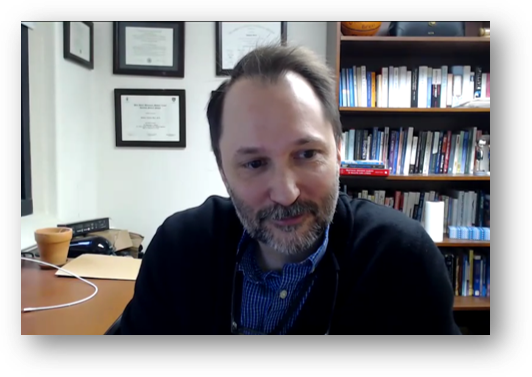
Tony Breu of Harvard Medical School has written more than 130 tweetorials on medical topics

With the migration from X/Twitter to other platforms, fewer scientists seem to be posting tweetorials, and that is a pity.  Tweetorials work well on newer platforms like Bluesky (by design) even if people call them something else. But fewer scientists seem to be daring to invest the time to write them. As newsfeeds on content-sharing platforms like LinkedIn are overrun by AI-generated slop, it might be time to revisit the good old tweetorial.

Perfect for scientists

So what are they, actually?

Tweetorials are a string of tightly written, connected tweets that question or explain something complex, with each of the tweets retweetable and potentially the start of a new sub-thread, drawing the curious reader downwards and setting off new scientific conversations. You can see an example of the start of one on the image below.

For a few years, tweetorials seemed to be everywhere.

On Twitter, they were ideal as introductions to a research topic, and scientists typically pinned tweetorials explaining their own research at the top of their profile, effectively making the perfect introduction to a first-time visitor to their profile.

As a genre they don’t play well with the platforms that want you to share one-off pieces of ‘content‘ (like LinkedIn) that then algorithmically compete for readers’ attention. But this is a good thing. They are for works of art, made for long-term consumption. Refreshing.

If you’re able to engender an interest in just a few small parties who have more of a following than you, then it has the ability to explode

Tony Breu

They were invented by the users: Microblogging platforms like the old Twitter had character limits to encourage brevity. Users went beyond the imposed character limit by threading multiple tweets together as threads. Tweetorials, a sub-genre of these threads that acted as ‘tutorials’, were a genre of threads then subsequently invented by scientists.

Tweetorials are a perfect fit for science.

They can be structured like tight versions of academic papers, with a question, leading to a methods section, a discussion, and a conclusion. This meant that academics could easily reformulate already existing papers as tweetorials.

Also, because each of the underlying tweets can be discussed and commented, they often start new conversations, with an original tweetorial leading to several separate chains of comments and new ideas.

The maestro of med threads

The format invokes scientific curiosity in the reader, teasing them with a short research question, and inviting them to follow along a thought process tweet by tweet.

Some researchers even post them as slow threads, one post at a time with a delay, allowing the reader to follow a researcher’s work in real time.

Each of the underlying tweets in the tutorial thread can be commented, and retweeted, sometimes setting off new discussions.

If anyone is at the centre of the tweetorial genre it is Tony Breu, Assistant Professor at Harvard Medical School. He has written more than 130 of them.

His tweetorials were consumed, argued and commented by doctors, nurses, pharmacists, students, and researchers from other fields. They have titles like ‘Charles Joughin, chief baker on the Titanic, who survived for two-plus hours treading water in the frigid Atlantic Ocean after the ship had sunk’ to ‘Have you ever wondered why we don’t use steroids to treat acute pancreatitis (AP)? I have!’

So when I started my book on Social Media For Research Impact with Marcel Bogers, I leapt at the opportunity to interview him.

Tony Breu posted his first tweetorial in 2018, he recalls.

“So I had thought about this question in the shower the day before and it was really gnawing at me: Why does someone’s hematocrit, the concentration of red blood cells decrease, when they have an acute bleed? When you’re bleeding you bleed whole blood, so the concentration of hemoglobin shouldn’t change”.

“I thought, let me sit down at my computer in front of the TV and throw together something with no expectation that anyone was going to be interested. At that point, I had a few hundred followers at most. But if you’re able to engender an interest in just a few small parties who have more of a following than you, then it has the ability to explode,” he says.

It did.

In fact, he told me, it turned out to be the most popular thing he’d ever done.

100s of tweetorials later, he has a mass following on X. His new account posting tweetorials on Bluesky already has a large following there also.

A tweetorial for him would take six to ten hours to make. To give you an idea of the process he has written a tweetorial (my favourites!) on how to write tweetorials here and here.

“I’ve never measured how long it took me to produce a tweetorial. But for a typical one that I’ve written over the last few years, I will download 50-100 academic articles, and read in detail at least 10 of those, So just the research component can take, let’s say, three to five hours. The actual construction of the tweetorial doesn’t take as much time in 2025, but certainly two to three hours,” he tells me.

This is a significant time investment. But they are widely reposted, commented and read. And in Tony Breu’s case, they have had a real impact in the world.

What a tweetorial wants to do is use a medium that is specifically geared towards quick consumption, like X or Bluesky, and do something with it that is the exact opposite, which is demand people’s attention for five to 10 minutes.

Tony Breu

In one tweetorial, for example, Tony asked why corticosteroids weren’t used in cases of pancreatitis. The thread caught the attention of a critical care doctor he had once worked with, who decided to launch a randomised trial to test the idea. The trial is still ongoing.

Some of Tony Breu’s tweetorials got hundreds of thousands of views, and his latest ones still get a lot of attention.

But tweetorials may be declining as a genre. And this is not solely a result of the decline of Twitter/X as a platform for scientific ideation, although this is a factor. There is a paradox at the heart of the tweetorial, according to Tony Breu:

“By definition, what a tweetorial wants to do is use a medium that is specifically geared towards quick consumption, like X or Bluesky, and do something with it that is the exact opposite, which is demand people’s attention for five to 10 minutes.”

Trying to replicate what we do in tweetorials with TikTok, that is just not going to work. That’s impossible

Tony Breu

Tweetorials were, in effect, a way in which academics revolted against the constraints of the platform. This then turned out to be an enticing way of sometimes driving scientific curiosity towards scientific problems.

I (Mike) interviewed Tony Breu as part of research for my book on Social Media For Research Impact which is co-authored with Marcel Bogers.

“I don’t anticipate a rejuvenation. I don’t think we’re going to get back to where we were,” says Tony Breu. “There’s probably going to be some other way that people do this work that isn’t the tweetorial. These model may work, continue to work in the future. But trying to replicate what we do in tweetorials with TikTok, that is just not going to work. That’s impossible.”

Wonder, not word salad

Generative AI can now produce a post, as ‘content’, faster, cleaner, and more impersonally than ever. This will speed up the actual posting process, even for something like a tweetorial. But this will prove to be the downfall of content-sharing platforms, if newsfeeds turn into a long queue of AI slop.

Tweetorial was, after all, never just ‘content’. It was a process and the reader could see it. You can automate a summary, but you can’t automate curiosity.

Tony Breu also has some of his recent tweetorials on Bluesky.

Tony Breu is currently taking a break from tweetorials. He is writing a book with Avraham Cooper called Why Doesn’t Your Stomach Digest Itself?

“It’s about human resilience and about how the body is able to withstand a constant barrage of things that are trying to put it awry, but also how in even extreme situations, humans are able to maintain themselves,” he explains.

Tony plans to write tweetorials again once his book is finished. “If a hundred people read it instead of a hundred thousand, that’s fine,” he told me. He does it also for his own sake:

I’ve come to terms with the fact that when I put these together, the main learner is me

Tony Breu

Tweetorials, as a genre, have jumped to Bluesky. Here is an screenshot of the top of one from Jorge Morales.

“I hate to say it, but a typical tweetorial, if I were to take one of them three months later, and I had the option to interview all the people who had read it from the first tweet till the end, I bet you most of those people would not remember very much from it.“

“Even I, three months later, may only remember 80% of it! But that’s okay. I’ve come to terms with the fact that when I put these together, the main learner is me,” he says.

“Anyone else who learns is just gravy.”

You can see a full list of Tony Breu’s tweetorials here.

Tony Breu is also co-host with Avraham Cooper on the medical podcast The curious clinicians.

Social media for research impact is a new book by Mike Young and Marcel Bogers (forthcoming January 2026). It invites you to think more clearly — and ethically — about how to use social media. Not just to disseminate your research, but to connect, ideate, co-create, and stay open to the unexpected. The book page is here.

Ice sheet or ice shelf: What’s the difference?

How a glaciology paper got pulled into the climate wars — and what you can learn from research that went viral for all the wrong reasons

I talked to Julia Andreasen while doing research for our book ‘Social Media for Research Impact’ which I wrote with Marcel Bogers (to be released by Routledge in January 2o26).

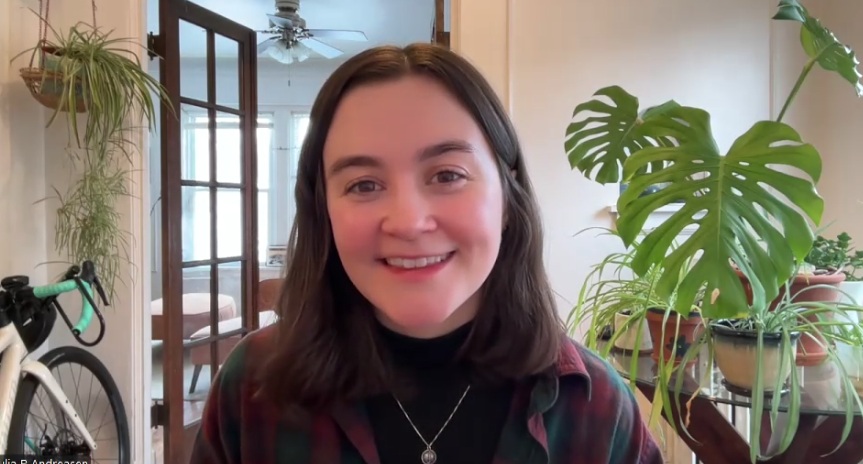
Julia Andreasen is a postdoc at the University of Alaska Fairbanks

Julia, who is now a postdoc at the International Arctic Research Center, University of Alaska Fairbanks, co-authored a paper in The Cryosphere in 2023 showing that more Antarctic ice shelves had grown than retreated between 2009 and 2019. It was a small, careful study, meant to fill a narrow data gap, and based on work she and her co-authors (Anna Hogg and Heather Selley) did during her master’s. But it got swept up in the larger climate debate after a single sentence from the abstract was lifted out of context and reframed by climate skeptics as evidence against global warming.

On Twitter (now X) everything bled into everything else.

In the abstract of the paper, she and her coauthors had written that more ice shelves were advancing than retreating in the period they studied. It was a descriptive observation, not a climate claim. But the sentence was seized upon by climate change skeptics.

Just to be clear: Ice shelves float on the ocean and respond quickly to winds, snowfall, and iceberg calving. Ice sheets, by contrast, are grounded ice that can melt due to climate change and raise sea levels. On Twitter (now X), the distinction between the two terms got blurred. ‘Shelf’ became ‘sheet’. A carefully worded scientific paper became a talking point in a viral pile-on.

If there were actual questions to our study, then I did reply, but I would never hear anything back

Julia Andreasen

“We are trying to understand climate change, but not everything that we discover is necessarily going to directly equate to climate change as we are looking at a short snapshot. In one way, this is what makes the field so interesting in the first place,” says Julia Andreasen.

She recalls the moment the online storm hit her personally: “I was in the car on the way home from a memorial service… and I just started getting pings and pings and pings.”

Tweets and notifications then spilled over into emails asking for answers. Julia tried to stay away from X, “but on email… if there were actual questions to our study, then I did reply, but I would never hear anything back,” she says.

On social media, “a master’s student I don’t know personally went to bat for me, like he was defending our team and replying to so many of the tweets and getting into the arguments online. I remember messaging him and telling him that what he was doing was so kind,” Julia recalls.

Julia Andreasen has written up her recommendations so that scientists in politicised fields can prepare.

Their small-scale study of a narrow data gap was, for a short moment, the focus of controversy on climate change.

In our book we refer to the term ‘context collapse’ when a social media post that was originally intended for a specific audience is exposed to other unintended audiences. It leads to misinterpretations when the context — or background knowledge — doesn’t travel with the shared post or image.

Knowing that this happens, trolls or campaigners who have particular political agendas, may use this phenomenon to deliberately share texts or images in their context to forward a particular agenda. They typically monitor social media posts or new papers for combinations of keywords — and then have a social media routine where they respond to, and share posts with these keywords in their context for the purpose of ‘owning’ a debate on a social media platform.

I truly thought that I was the only person to ever experience this. I felt like they were using me as a way to say that climate change isn’t real

Julia Andreasen

Context collapse can happen in any field, but deliberate manipulation happens typically in politicized fields (like glaciology in a climate change context). Julia’s study may have been the victim of this.

So what happened?

At the height of all the tweets and replies, Julia was doing her preliminary exams for her PhD.  Luckily, her supervisor explained to the committee what was going on, and this in itself became the subject of discussion.

Ice sheets are grounded ice, as illustrated here on Antarctica (NASA Goddard’s Scientific Visualization Studio, Public Domain)

Other, more seasoned, scientists also chipped in around this time with the advice that Julia should focus on her upcoming field work and not to let herself get sucked into “this sort of black hole that the internet has created,” she says.

“I truly thought that I was the only person to ever experience this. I felt like they were using me as a way to say that climate change isn’t real. And that felt pretty awful. I didn’t feel like I had any voice and so I felt very small compared to the loud voices in the space.”

“But everyone in our community was supportive. And I think that was that really was revealed to me when fact check articles came out, because there were other scientists in my community responding to that and providing additional information.”

After a while, of course, the whole outburst of controversy died down as these things do. It is impossible to gauge its effect, if any. No-one knows whether the storm on X ever really moved anyone towards climate skepticism or whether it just made the critical tweeters look naive. The only thing we know is that original article was recognized by science news site Carbon Brief as having the highest Altmetrics score ever among their climate paper reviews. Altmetrics track how research is shared and discussed online.

This is an ice shelf, specifically, the Ross Ice Shelf in 1997 (NOAA Corps Collection – public domain)

The paper’s high score is likely a result of the controversy. If anything, it might have incited curiosity for the science behind glaciology among those who are genuinely interested.

Julia Andreasen has written up her recommendations so that other scientists can prepare in an article in EOS which can be read here.

Julia Andreasen’s advice:

  • Anticipate potential misunderstandings or deliberate misinterpretations in article abstracts.

To me she says “I think I would frame it differently now. I would add a sentence right up in the abstract like: ‘This does not provide a basis for conclusions about climate change.'”

We are told to just grind out the science, and … leave it to others to make it accessible. But I feel there needs to be more education for the cases where science jumps over the line

Julia Andreasen

“We have figures in there showing all the different ice patterns that we’ve defined. And so I, in another world, would have said ‘we found six different patterns of ice growth and retreat’ and that’s it. And nothing about how many are growing versus how many are retreating. Or if we had put that in there, maybe say, however, this does not say anything definitive about climate change.”

This small addition could have helped set expectations for anyone reading with curiosity—or for journalists scanning for headlines, she says.

  • Only selectively debate with deliberate misinformers—not all misinformation is worth addressing. Work with fact-checkers and journalists to reframe discussions instead.

This is in line with what we recommend in our book. Finding out exactly whether you are debating with people who are in good or bad faith, is the first step. In our book we propose a four-step system to adjudicate if, when, and how, to respond if you ever get into a situation like Julia Andreasen. The first step is to evaluate the critic. And not all of them are deserving of your energy.

Landsat Image Mosaic of Antarctica team (NASA – public domain)

But being selective about who you debate with, also means that you should ‘show up for your science’ in terms of news media, according to Julia Andreasen.

“My coauthors and I chose to engage with reporters who were willing to fact-check and refocus the discussion,” Julia writes in the EOS article. “Working with journalists can reframe your science in accessible language to enhance its impact and foster public understanding”.

According to Julia, scientists should not just churn out academic papers for their peers. They need to be aware of how a paper will be interpreted in a non-scientific or non-field-specific context.

“We are told to just grind out the science, and then we should leave it to others to make it accessible. But I feel there needs to be more education on our side in terms of the communication of science, just for the cases where science jumps over the line”.

Social media for research impact is a new book by Mike Young and Marcel Bogers (forthcoming January 2026). It invites you to think more clearly — and ethically — about how to use social media. Not just to disseminate your research, but to connect, ideate, co-create, and stay open to the unexpected. The book page is here.

LinkedIn and social media networking — course for health science PhD students

A practical, hands-on workshop in health science networking and communication via LinkedIn and other social media platforms. 

The course will be held in the new Maersk Tower at the Faculty of Health and Medical Sciences, University of Copenhagen. (Image with permission from Instagram user @Dead_Lab

This PhD course at the Faculty of Health and Medical Sciences in Copenhagen is free of charge for PhD students at Danish universities (except CBS) and for PhD students at graduate schools in the other Nordic countries. You can read more about the course and sign up here.

Scientists within the health and medical sector will find LinkedIn (and other social media platforms like Bluesky) particularly useful:

  • The platforms allow real time access to, for example, patients’ and public perspectives, communities of support, and to advocacy groups internationally — but within a narrow medical specialization.
  • The increased use of visual abstracts and digital formats in communicating research has been helped by the LinkedIn and Bluesky/X scientific community.

There are more details below this short introductory video:

The course is at the University of Copenhagen’s Faculty of Health and Medical Sciences and is open to all PhD students at Danish universities (except Copenhagen Business School) and for PhD students at most graduate schools in other Nordic countries.

A typical ‘visual abstract’. A shareable digital format that has taken off in recent years, particularly in the health and medical sciences.

The course goals

You will:

  • Learn how to use LinkedIn and other social media platforms to support your work and career as a researcher
  • Find a social media routine that fits your personality, daily routine and specific medical specialty
  • See how to be strategic in your use of social media
  • Set up personal routines, augmented by automation, for monitoring news and ideas from specific research areas.

Photo with kind permission of Instagram user @nazanins_daily

The course is relevant for both beginners and experienced users.

“Very ‘hands on’. I will definitely recommend this to other PhD students” —  previous participant

Dates: 11 + 25 March 2026, both days from 09:00 to 13:00

There is more information and you sign up for this course here.

Does your department, faculty or university need to boost its researchers’ international impact? My workshops in social media introduce researchers to the systematic use of LinkedIn, Bluesky, Reddit, X and other specialized social media and tracking applications. All Mike Young Academy workshops are bespoke and custom-fitted to specific scientific fields. Workshops can be held in-person, or online as a combination of video-conferenced live-sessions with group ‘breakout’ rooms, individual feedback, and homework.

Why niche social platforms like iNaturalist matter to science

Forget viral content. Here is a quiet social platform where researcher impact comes from verified observations and open science

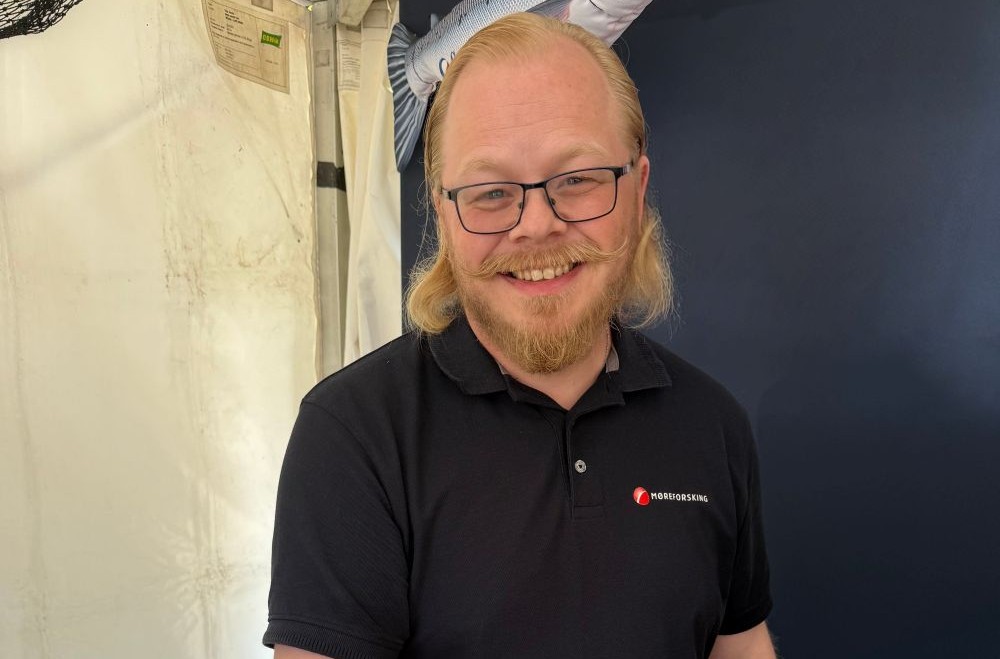
For marine biologist Trond Roger Oskars, the niche social media platform iNaturalist has become a vital tool for both research and outreach.

“iNaturalist is a social media where you upload images of animals or other organisms you’ve photographed, and then experts and knowledgeable amateurs give their opinion on what species it is,” Trond Roger Oskars explained to me, calling it the “Twitter for species”.

I interviewed him recently in preparation for the book Social Media for Research Impact that I have co-authored with Marcel Bogers and that is due for release by the publisher Routledge in early 2026. I was interested in Trond’s use of niche platforms outside the mainstream: In the book we advocate for the use of niche platforms with small-scale — but cumulative — impact, and platforms that are designed with other functions in mind, but that have a social media component.

Closest to us on Trond Roger Oskars’ hand is a common sunstar, (crossaster papposus). Behind that is a blood star.

iNaturalist is a site for hobbyists, but its structure is built for scientific contribution. When a species identification receives enough consensus, it’s marked as ‘research grade’ and automatically added to the Global Biodiversity Information Facility (GBIF)  — one of the world’s largest public biodiversity databases.

In other words, what begins as a casual photo taken by a diver or beachgoer can end up as a verified datapoint in an international repository. This is social media acting not just as a tool for research dissemination, but as scientific infrastructure.

For Trond Roger Oskars of the Møreforsking Institute in Norway, the effects are clear in practice: “Recreational  divers are essential for documenting rare species — they often send me images or specimens that I wouldn’t encounter otherwise. If they didn’t go around photographing every small thing, I don’t think the marine field would move forward,” he says.

Trond Roger Oskars’ own research on snails has led to major taxonomic revisions.

The collaborative verification model of iNaturalist makes it possible to integrate contributions from non-researchers into formal science, in near real time.

This is most likely a Diaphana minuta, a species of gastropod found in Europe and North America…

The platform also supports open content use. “I use iNaturalist to get images. Most of the images that are uploaded there are in the public space, or CC BY 4.0,” Trond Roger Oskars says. This makes the platform a valuable source for visual material for presentations, outreach posts, and educational content.

…in this case it was observed by someone off the coast of the US.

What sets iNaturalist apart is how it combines structured data collection with community input — making it both a crowdsourced field tool and a global biodiversity hub. Scientists in remote or underfunded areas, or those working in highly specific taxonomies, can gain access to a distributed community of identifiers and observers.

As a niche medium, iNaturalist, does extremely well what mainstream social media like LinkedIn and Facebook only do well with their Groups functionality, with separated private or semi-private communities based on shared interests. What separates a niche platform like iNaturalist from the Group communities of mainstream social media, is that it is solely focused on what users are on the platform are there to do, with no distractions from newsfeeds cluttered by advertising and influencer content.

Trond Roger Oskars is also active on two Facebook Groups where people upload images, one focused on marine invertebrates, one focused specifically on sea slugs.

iNaturalist and these two Facebook Groups are a supplement to the traditional dive books – printed guides used by recreational divers to help identify marine species in specific diving regions.

…then experts like Trond Roger Oskars helped identify it.

“Usually a diver has just clicked a picture and doesn’t know what species it. So people usually just tag me directly in the groups. They get to learn something new and engage more closely to nature so that’s a bit of fun. A lot of the old dive books are now obsolete. So they have to go to social media to get a correct image, and people are happy that there’s someone that can answer, “ says Trond Roger Oskars. The largest Facebook Group has 60,000 members and includes both diverse scientists, and people who just like the images.

Both iNaturalist  and Facebook groups like this one for sea slug enthusiasts have turned into networks that connect scientists, to divers, to wider publics, according to Trond Roger Oskars.

“It’s really great that they have brought both the people with the specialized expertise and the people with the hands-on experience together.”

Social media for research impact is a new book by Mike Young and Marcel Bogers (forthcoming). It invites you to think more clearly — and ethically — about how to use social media. Not just to disseminate your research, but to connect, ideate, co-create, and stay open to the unexpected. The book page is here.

Researchers are (also) stoking politics on Bluesky. Here is how to avoid it

When researchers migrated from X to Bluesky, the hope was for a quieter space. They wanted less outrage, and more science. But reality is biting back. So here are a few tips to avoid the politics anyway.

Is scientific Bluesky being swamped by US politics?

The posts from influential scientists that are driving ‘engagement’ in the form of likes and reposts on Bluesky is not science. It is political commentary and cultural hot takes – mostly focused on left-of-centre and progressive US politics.

This is according to an analysis of 18,000 posts from influential scientist accounts by my colleague Lasse Hjorth Madsen. He has looked at the highest performing posts in terms of likes and reposts among 200 highly influential science accounts on the platform. Lasse’s post analysis comes after several iterations where he and I (Mike) have jointly mapped out the emerging Bluesky scientific community, finding the most central and influential scientists and research fields on the platform.

Lasse’s latest analysis points to something uncomfortable: Some academics are not just victims of the attention economy, they are active participants in it. And the tone of the posts that spread, mirrors the posts that spread elsewhere online — politics, outrage, frustration, and protest.

The table above shows the most liked original posts (not reposts) among our influential scientists’ group.

Before we go on, I need to both hedge my claims, and try to give an explanation of what is going on:

  • Bluesky, to a much higher degree than other platforms, enables you to set up your newsfeed so that you only see what you are interested in. The most savvy Bluesky users can avoid the politics, and some of them will do so (see my tips below). That is one of the reasons why many scientists are there in the first place.
  • The analysis is based on the top 200 of our ‘most influential’ list, based on centrality measures. This group could be already pre-selected to have centrality because they are already in a non-science politically-oriented community that enables the wider traction. What we see is a kind of circular logic that might not prove anything.
  • When you count reposts of academics’ original posts, all of the reposts are not necessarily coming from academics themselves. On Bluesky, when you repost, it can be shown on your own followers’ feeds. What this means is that a political post from a scientist, could be highly reposted outside the scientific community, then circle back to be seen by other scientists after it has been circling around the political echo chamber gaining likes and reposts from people who want to virtue signal a specific political standpoint.
  • A large part of scientific Bluesky is scientists from the United States, so it is, actually, no surprise that posts about US politics dominate global feeds.
  • Scientists are, in fact, generally mostly left of centre in terms of their politics.
  • Scientists on Bluesky are, to a higher degree, left of centre in terms of politics, precisely because a large group of them have migrated from X after the controversy surrounding the Elon Musk takeover.
  • The group of scientists who get the most likes and reposts is likely hiding a much larger undergrowth of scientists on Bluesky who avoid politics, and are happy to avoid viral hot takes.

We have to be really careful we are not mistaking correlation for causation here. Our analysis does not show that posting political hot takes lead to more reposts or higher follower numbers. Heaven forbid, this will not lead to more understanding and more impact for science. Our analysis just shows that highly central scientists in our group got the most reposts when they did post politically.

The lesson? A new platform doesn’t erase the old dynamics. If researchers want Bluesky to become more than an alternative outrage machine, they will need to make some conscious choices.

What can you do to avoid politics?

So how can we help this along? What do you do if you want to avoid politics in a professional or academic context altogether?

As a first step use the functionality of Bluesky to set up different feeds for different topics and modes of working. If you really want to see the politics, then leave the standard newsfeed that lets you see ‘Following’ (you can see my feed on the image above – the feed that is headed ‘Following’). Otherwise set your front page so that you don’t see following as the first thing.

Now set up feeds with only your interests and lists, and make sure that they show first on your newsfeed.

Feeds can be found on the left

See the hashtag symbol on the left? Click on that.

Lists, like good old X, are sets of people that you want to see the posts from. You can find those by clicking on the little bullets symbol below the hashtag. In my set-up shown above right my list of ‘Danish research institutions’ is showing on number fourth spot. Lists on Bluesky are always public.

There is a good guide on how to customize bluesky feeds here.

Click on the cogwheel

But what you need to know is that you can adjust the front page of your Bluesky, so that the first thing you see on the app or on desktop, is a specific feed with your interest. You don’t have to see the posts from the people you are following before you see your interests. This is a great way to avoid getting ensnared in the politics and hot takes.

As a second step, if this does not work, and this goes for Bluesky just as much as any other social platform: Just unfollow the people who post about the politics. Tough, but they had it coming for them. They won’t get a notification.

Click the arrows to adjust which feeds should show first when you open Bluesky. Adjustments apply to both your desktop and phone versions.

As a third step, you can hide a specific account if you see a political post anyway in spite of your unfollow (someone in your network who follows them might have reposted it, which will then put it on your feed). Just click on the three dots at the bottom of the post to mute this particular person. This is also the place where you can block particular people which stops them from interacting with you.

Fourth step. Bluesky’s starter packs feature lets you follow groups of scientists within your own field. This is brilliant. But be aware that large starter packs may include a number of scientists who post about politics. So a fourth step is to unfollow or mute these specific offending scientists afterwards (back to second step!)

Bookmarked searches are the final resort if you can’t get the feeds to shed out all the politics

Fifth step. Sometimes all of the above is not enough to maintain a non-distracting, non-outrage, non US-politics focussed feed anyway. For many specific tasks I resort to bookmarked keyword searches. Just as an example, this link only shows the Bluesky posts that have the ‘University of Copenhagen’ in them.

I hope this helped!

Do you have any further ideas on how to avoid politics on Bluesky? Let me know in the comments!

Social media for research impact is a new book by Mike Young and Marcel Bogers (forthcoming). It invites you to think more clearly — and ethically — about how to use social media. Not just to disseminate your research, but to connect, ideate, co-create, and stay open to the unexpected. The book page is here.

For scholars, being kind could be contagious

A new paper argues that small, voluntary acts of kindness can ripple through communities, improving mental health. What might this mean for scholars on social media?

It is a good idea for governments to promote voluntary acts of kindness. And it is a good idea to practice being kind yourself, according to a paper by Tri-Long Nguyen and Ji Young Lee, both of the University of Copenhagen.

Practicing kindness can improve mental health and well-being in both individuals and at a societal level. In their paper Kindness as a public health action, they argue that policies that encourage voluntary acts of kindness are practical, cost-effective, and ethically sound.

Their paper was recommended to me recently while I was interviewing sources for our forthcoming book on ‘Social Media for Research Impact’. So I thought, could this be applied to the idea of being a kind academic on social media?

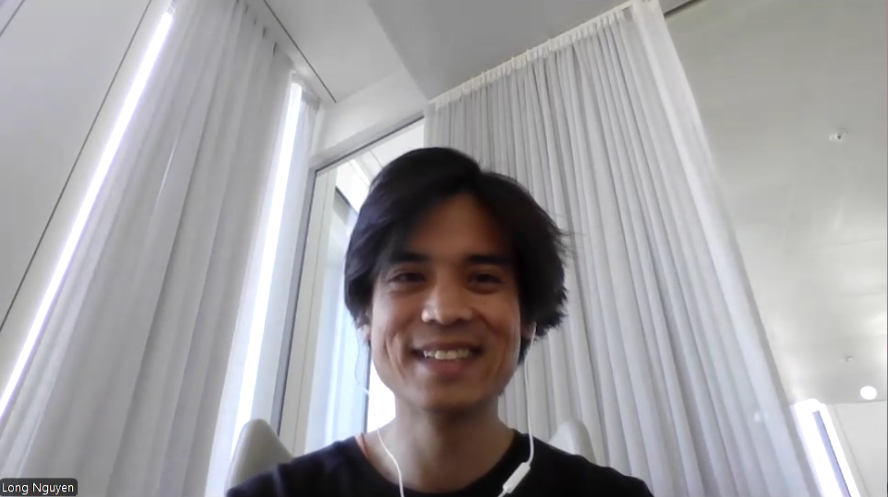
Tri-Long Nguyen (left): In the Buddhist tradition being kind to yourself is not in opposition to being kind to others.

Tri-Long Nguyen is an associate professor in epidemiology with a background in pharmacy, statistics, and education. When he is not doing science, he reads a lot about philosophy and Eastern practices like Zen Buddhism. His work with Ji Young Lee, an assistant professor in philosophy and bioethics, makes the case that being kind is not only a nice thing to do: It is evidence-based good practice.

Algorithm as a kind actor

In their paper they used the preventive medicine framework proposed by Geoffrey Rose in work from the 1980s. He is known for the ‘prevention paradox’: Massively applying to the general population an intervention with small individual benefits is more effective than targeting only those at high-risk of disease. This is because the number of people at high risk is small, so targeting only them would prevent a lower number of absolute cases.

“The biggest mental barrier that people have is the fear that they cannot change the world alone from an individual position”

Just like infectious disease, acts of kindness cascade and multiply, Tri-Long Nguyen and Ji Young Lee argue. And just as in preventing disease, the small individual benefits of cultivating kindness, understanding, love and compassion can collectively generate large-scale social impact by propagating positive effects beyond the initial recipient of the kind actions.

Co-author Ji Young Lee posted about their paper on LinkedIn

In a blog post recently I listed 11 kind habits academics should get into on social media. One of my pet theories is that by doing specific kind practices on social media you are shaping a community around yourself so there is a higher chance of these kind of interactions taking place in the future in your social media vicinity.

This is not just the effect of people copying you. It is because platforms’ algorithms tend to surround you with people who are doing the same types of kind actions, this reinforces the practices as a collective action due to network effects. You are basically creating ripples of kindness, and the algorithms may be reinforcing it. So by practicing kind actions on the social media where scholars are active, you are helping the whole of academia become a kinder place.

Collective conciousness

Our paper “is exactly analogous to this,” Tri-Long Nguyen said when I presented my own pet theory to him on our Zoom call.

“The biggest mental barrier that people have is the fear that they cannot change the world alone from an individual position. But I think that when we change ourself we inspire other people to change themselves as well. We’re not on separate islands and that’s what we try to emphasize in the paper.”

I put it to Tri-Long Nguyen that support for the contagiousness of kindness theory can be found on the Reddit platform. People post here anonymously, on different subreddits, each with a different topic. On many of them, people respond voluntarily to help other people, with no other reward than the knowledge that they are helping others. As they are posting anonymously, there is no reason to believe they are doing it for egoistical reasons or to boost their status.  By responding, they are simply helping their community and at the same time increasing the likelihood that other people do the same.

“The non-action is what we cultivate before we speak, before we write, before we perform an act of kindness”

For Tri-Long Nguyen this type of social media practice, and their own paper, ties in well with his practice of Zen Buddhism. If ‘being kind’ propagates to others, it is a sociological phenomenon that can be analyzed through the lens of ‘complexity theory’ and ‘system theory’. But the Buddhist tradition has, through the course of millennia, had a lot to say about it also. For example how being kind to yourself is not in opposition to being kind to others. We are all, in this tradition, ultimately nourishing and cultivating a same ‘collective consciousness’ that we all ‘consume’. There is no separation between you and me, we are interconnected.

Non-action

I showed Tri-Long Nguyen two slides from a recent social media workshop I did for researchers: The first slide outlines a ‘mindful’ approach to social media platforms that protects your attention span, guards your boundaries, and avoids the constant pressure to perform. The focus is on self-care. The second slide outlines an ‘ethical’ approach to the social media platforms that encourages generosity, openness, and support for others. The focus here is on social media as a channel to fulfil our ethical obligations.

I knew, even before I asked him, that Tri-Long Nguyen would politely dismantle my distinction. Are they basically the same thing?

“Yes they are!” Tri-Long Nguyen responded.

“We cite at the very end of our paper the Zen master Thích Nhất Hạnh. He talked a lot about how when we talk about action, we often think about something concrete, like something to do, write, say, or do physically. But there is another aspect that is non-action. The non-action is what we cultivate before we speak, before we write, and before we perform an act of kindness,” Tri-Long Nguyen said.

“Non-action is in a way already action because it increases our well-being and therefore shapes the way that we cultivate loving speech or loving actions to others. So that’s how I relate the two approaches, mindful and ethical.”

Social media for research impact is a new book by Mike Young and Marcel Bogers (forthcoming). It invites you to think more clearly — and ethically — about how to use social media. Not just to disseminate your research, but to connect, ideate, co-create, and stay open to the unexpected. The book page is here.

What I learned from co-authoring a book

I want to share a few reflections on how co-writing a book has been a powerful experience for me. 

Marcel Bogers and I sent a book manuscript to the publisher recently and our work will be released in a few months time. (No spoilers about the actual book here: I want to stay on message!)

Marcel Bogers (left) and I went for a walk with my family in Grib forest when we had finished the manuscript

This is my first book, and a lot of my previous writing in a professional context has been as a journalist. I have many positive experiences with the collective researching, drafting and writing of journalistic articles and stories. But here, most writing, even nowadays, is as a sole author.  

Efficient, and in control

The way I see it, being the sole author of any piece of writing, including a non-fiction guide like ours, has its advantages:

  • Writing is more efficient, as you don’t have to coordinate with anyone else. You can simply work sequentially: now I work on this chapter, now I work on that.
  • It is written in one tone of voice, and this means that you can spend a lot less time revising to unify this voice once it has been drafted.
  • As sole author you have complete control over the structure, topics, format, and expression.

But co-authoring a book has advantages too. And this was brought home to me the last six months working with Marcel. Collaborating on a book is not just a 1 + 1 = 2 situation. The sum is greater than the parts.

Something new in the world

Having two authors adds something fundamentally different.

Here are the specific advantages that I have thought about in the actual book-writing process:

  • Natality. With two authors, there is a higher chance that something new comes into the world. The discussion in itself leads to new thought emerging that would not have appeared in one of the authors. This reminds me of the concept of ‘natality’ in Hannah Arendt, where being human in a shared space means bringing something fundamentally new into the world.
  • Darlings. In journalism school, you are taught to ‘kill your darlings’. You fall in love with your own ‘cute’ turns of phrase, and you need someone else to take them out. In this work process, I have had many darlings killed!
  • Network. In this type of non-fiction work, you’ll be looking for wide variety of interview sources with insight, experience, or authority. A co-author doesn’t just add volume—they add variety. I have come into proximity with people I wouldn’t normally approach from different disciplines, countries, and platforms.
  • Momentum. Writing a book takes time and you go through bumps and troughs. As co-authors we could take turns to pick up the slack.
  • Blind spots. You bring different assumptions, biases and intellectual traditions to the table. My co-author has shone a light on my own blind spots and made me more self-aware of where I need to learn more.
  • Division of labour. One of you can be good with sources and interviews, another can be good with references and structure. And the funny thing is: you only find out along the way. In this way, we ended up specializing, while at the same time learning from each other.
  • Learning. It deserves another mention. When you write a book with someone else, you don’t just learn more about the topic — you are exposed to practical shortcuts, processes and technological tricks. I got better by working with someone else.

Another way of being human

In one way, I suppose, co-authoring a book is just another way of being human. After all, nearly everything new in the world is the result of a collective endeavour. But writing a book with someone else makes this visible in a way that solo work rarely does.

If you have any thoughts yourself on the subject feel free to write them in the comments below!

Call for experts: Social media for research impact

I (Mike) am writing a book on social media for research impact with Marcel Bogers — an expert on open and collaborative innovation. We appreciate your help!

The book has a working title — Social Media for Research Impact — and will combine the expertise in innovation, technology and entrepreneurship from Professor Marcel Bogers and my own (Mike) practical work experience helping academics and universities boost their impact through social media. It will be published by Routledge and is likely to be released in the autumn of 2025.

We want this to be a collaborative project, and we’re looking for experts, case studies, and stories to enrich the book. Below are some key topics where we’d love to hear from you (or someone that you can suggest to us in your own network)!

What we’re looking for:

The concept of ‘research impact’ and social media

We need experts on the theory of research impact and how social media practices tie into it. This includes the interplay between scholarship, policymaking, and public engagement.

Social media identity and personal branding

We want insights on how scholars build their online presence. Which platforms work best? What strategies succeed? We’re especially keen on case studies of academics that have built a strong online identity.

Increasing research visibility and impact via social media

We need case studies of scholars who’ve used social media effectively. Have you seen great examples of posting techniques, use of infographics, or creative sharing strategies? Let us know!

Customizing your information environment

How do academics use social media to manage the flow of information? If you’ve developed methods for filtering feeds and managing your time online, we’d love to hear about them.

Automation, AI, and social media

We’re exploring the pros and cons of automation for academics: What works well? Where are the risks? We want to hear from people using tools like scheduling apps, chatbots, or AI content recommendations, custom GPTs for content creation, or tools to find related social media posts and accounts.

Navigating the dark side of social media

We need stories and strategies around handling the challenges of social media: Trolling, self-censorship, burnout, and more. We’re particularly looking for case studies from scholars who have social media experience in politicized or controversial fields.

Kindness and generosity in academic social media

We want to explore the positive side of social media. Do you know of scholars who share openly, help others, or spread kindness in academic spaces? We want to hear those stories.

The future of social media for scholarly impact

We’d love to hear your thoughts on the future of social media for research impact. What promising strategies are on the horizon? Which older approaches might be worth revisiting?

We want diverse perspectives

We recognize that Marcel and I bring certain biases to this project: We’re both men, from Western Europe, and embedded in traditional academic culture.

So we’re actively seeking diverse voices — from different cultural, geographical, and disciplinary backgrounds. We want to hear from:

  • Scholars from underrepresented communities
  • Non-academic stakeholders affected by research
  • People in different fields and stages of their careers

Interested?
We’d love to hear from you!

Email me Mike on mike@mikeyoungacademy.dk if you have any ideas.

This is a collaborative intellectual journey — and we hope you’ll join us!

Does your department, faculty or university need to boost its researchers’ international impact? My workshops in social media introduce researchers to the systematic use of LinkedIn, Bluesky, Reddit, X and other specialized social media and tracking applications. All Mike Young Academy workshops are bespoke and custom-fitted to specific scientific fields. Workshops can be held in-person, or online as a combination of video-conferenced live-sessions with group ‘breakout’ rooms, individual feedback, and homework.

Scientists in Denmark — the top 100 on social media in 2022

Which scholars are surging ahead on the Danish social web?

In an age of populism and science denial, I feel that scientists that garner attention to themselves and their work should be celebrated.

If they only had the chance! These Danish scientists would have aced it on the TwiLi Index. Do you recognize them? See who they are at the bottom of this article.

This was why I started releasing my annual TwiLiIndex four years ago, partly in reaction to the Kardashian Index, that made fun of scientists by measuring the discrepancy between scholars’ social media following and their citations.

My own index started in Denmark, and this year I have extended it to Norway and Sweden, so there are three separate indices to compare and evaluate.

The scientists who rank on the index for their high social media followings are all respected scientists in their own right. The way I see it, there is nothing, nothing to be ashamed of. Nothing to hide.

So here it is! Here below are the top 100 scientists in Denmark in 2022.

Please take it in a positive spirit! The index takes a lot out of me, but it is also rewarding, and I will keep on releasing these indices every year until the last person says ‘good job and keep up the good work!’

You can read about the methodology of it here.

It is called the TwiLi Index (=Twitter/LinkedIn index) – and you say it like you would say ‘twilight’ without the ‘t’. It ranks academic scholars affiliated to research institutions based on their Twitter and LinkedIn following. Twitter and LinkedIn are the platforms most used by researchers and scientists in a professional sense, as they allow networking and interaction within highly specialized fields.

Since 2019, the TwiLi Index has been reviewed in several publications. Some point to its usefulness as one of many measures of researcher success that supplement bibliometric scores, citations, and educational activities.

My TwiLi Index is based on a TwiLi score. Below you will see two separate measures of scientists’ impact, centrality and pagerank on Twitter (see explanation below). To do this I partnered up with my good friend, the data scientist Lasse Hjorth Madsen, who developed a bespoke web app for Mike Young Academy to organise publicly available data extracted using the Twitter API.

Centrality and pagerank are not integrated into the scientists’ TwiLi. So for the TwiLi index that is listed below, the top 100 scientists are ranked only on their TwiLi score. Each of the top 100 scientists then have their centrality and pagerank ranks — among nearly 4,000+ scientists on Twitter in the Nordic countries — listed after their name.

Centrality

Centrality evaluates scientists as hubs for flows of information on Twitter. A scientist has ‘centrality’ if they are the shortest path between other scientists in a network. Scientists score high on centrality if they are the shortest path many times. Centrality in this case has been calculated based on a network of more than 4,000+ scientists on Twitter in the Nordic region, so if you have a centrality rank of 23 in the table below, you are the 23rd highest centrality scoring scientist among the 4,000+ scientists. If you are a scientist with a network that is outside these countries, you may score and rank lower on centrality.

Pagerank

Pagerank evaluates scientists as attractors of influential followers. It is an indirect, proxy measure of scientists’ impact based on their followers’ follower numbers on Twitter. A scientist has a high Twitter-pagerank if the people who follow them have many followers. So getting followed by another scientist who has a high following on Twitter improves your own pagerank. However, getting followed by, say, a media Twitter account with many followers will also increase a scientists’ pagerank. So pagerank tends to favour ‘celebrity’ scientists known for other things like politics, or established scientists in fields that are in the public eye.

As can be seen when you browse down the names on the index (below) it is an ‘index for Denmark’ but not a ‘Danish’ index. International scholars are well represented in the top 100.

If you are a part of the Danish science and research community, my ranking (see below) can serve as inspiration for new contacts!

Are you not on the list? This ranking is partly based on manually extracted data (see methodology here) and I may have missed a few active scientists and researchers who have large followings. If you know someone who should be on this list, (maybe you!), please write below in the comments, or write to mike@mikeyoungacademy.dk. Updated, final, 2022 rankings will be released at the end of October 2022.

The 2022 TwiLi Index for Denmark

Here are the top 100 scientists in Denmark on social media as ranked on my TwiLi index! The data was collected May-June 2022.

Oh yes! You would like to take a deep dive into the methodology of the TwiLi Index here!

Format: TwiLi index rank / Up , down , or no change ⇒, since 2021 / Name / Affiliation / Bio on Twitter / Twitter followers / LinkedIn followers / TwiLi index score / Centrality rank among 4,000+ Nordic scientists / Pagerank rank among 4,000+ Nordic scientists / Link to Twitter account.

1 – () – Svend Brinkmann – AAU

Psychologist & Professor Tw. followers: 48,932 LI followers: 38,045 TwiLi index: 21.48 Centrality rank among Nordic countries: 26 Pagerank rank among Nordic countries: 2 Follow Svend Brinkmann´s Twitter account here:

2 – () –  Sahra Ahmed Koshin – UCPH

PhD Candidate, gender & Somali diaspora humanitarianism in complex crises @KU_IFRO, @IDS_UONBI, @Diaspora_Hum | Storyteller & Founder @SomGenderHub, @PuntlandW Tw. followers: 29,160 LI followers: 27,855 TwiLi index: 19.85 Centrality rank among Nordic countries: 1,572 Pagerank rank among Nordic countries: 2,996 Follow Sahra Ahmed Koshin´s Twitter account here:

3 – () – Alf Rehn – SDU

Professor of innovation, design, and management. In addition a writer, speechifier, and popular culture geek. Tw. followers: 64,294 LI followers: 10,459 TwiLi index: 19.33 Centrality rank among Nordic countries: 33 Pagerank rank among Nordic countries: 100 Follow Alf Rehn´s Twitter account here:

4 – () – Alireza Dolatshahi-Pirouz – DTU

Assoc. Prof at DTU Health (Denmark), CTO & co-founder OuroBionics, co-founder #TeamBioEngine. |Cyborganics|&|LivingMaterials| Tw. followers: 9,897 LI followers: 31,560 TwiLi index: 17.98 Centrality rank among Nordic countries: 1 Pagerank rank among Nordic countries: 103 Follow Alireza Dolatshahi-Pirouz´s Twitter account here:

5 – () –  Bent Flyvbjerg – ITU

Professor @UniofOxford @ITUkbh. Award-winning author, speaker, adviser Papers for free here: http://bit.ly/172rVR0 Books: http://amzn.to/384cZte Dialogue yes, polemics no Tw. followers: 8,468 LI followers: 24,145 TwiLi index: 17.22 Centrality rank among Nordic countries: #VÆRDI! Pagerank rank among Nordic countries: #VÆRDI! Follow Bent Flyvbjerg´s Twitter account here:

6 – () –  Christine Stabell Benn – SDU

Professor, Global Health @SyddanskUni. Studying the overall health effects of vaccines, discovering that they have important non-specific effects #NSEvac. Tw. followers: 16,851 LI followers: 11,770 TwiLi index: 17.21 Centrality rank among Nordic countries: 29 Pagerank rank among Nordic countries: 15 Follow Christine Stabell Benn´s Twitter account here:

7 – () – Lars Christensen – CBS

International economist, “Money Doctor”, sports analytics nerd, research associate Copenhagen Business School, lacsen@gmail.com +45 52 50 25 06 Tw. followers: 15,733 LI followers: 9,891 TwiLi index: 16.77 Centrality rank among Nordic countries: 286 Pagerank rank among Nordic countries: 586 Follow Lars Christensen´s Twitter account here:

8 – () – Finn Tarp – UCPH

Danish Professor of Development Economics at @uni_copenhagen🇩🇰, coordinator of @DERG_DK and former Director of @UNUWIDER🇺🇳 (2009-2018). #DERGDK Tw. followers: 26,961 LI followers: 3,466 TwiLi index: 15.69 Centrality rank among Nordic countries: 104 Pagerank rank among Nordic countries: 54 Follow Finn Tarp´s Twitter account here:

9 – () – James Rogers – SDU

DIAS Associate Prof | Senior Fellow @CornellTPL | @LSEIDEAS | Adviser @NATO, @UN, @APPGDrones | #TEDx Speaker | Podcast @HistoryHitWW2 | Agent @TheSohoAgencyUK Tw. followers: 13,444 LI followers: 4,399 TwiLi index: 15.04 Centrality rank among Nordic countries: 93 Pagerank rank among Nordic countries: 250 Follow James Rogers ´s Twitter account here:

10 – () – Peter Nedergaard – UCPH

Tweeter om politisk ufornuft og manglende udsyn i Danmark og i Europa. Tweets on political irrationalities in Denmark and Europe. Tw. followers: 2,193 LI followers: 29,301 TwiLi index: 14.93 Centrality rank among Nordic countries: 938 Pagerank rank among Nordic countries: 515 Follow Peter Nedergaard´s Twitter account here:

11 – () – Diego F. Aranha – Aarhus

Associate Professor at @csaudk in 🇩🇰. Security researcher and scientist forged by medical quackery and insecure e-voting. #TeamAdditive for ECC notation. Tw. followers: 14,356 LI followers: 3,869 TwiLi index: 14.91 Centrality rank among Nordic countries: 1,992 Pagerank rank among Nordic countries: 2,837 Follow Diego F. Aranha´s Twitter account here:

12 – () –  Roslyn Layton – AAU

International Tech Policy, US/China/EU. Aalborg University Copenhagen Tw. followers: 13,635 LI followers: 3,946 TwiLi index: 14.87 Centrality rank among Nordic countries: #VÆRDI! Pagerank rank among Nordic countries: #VÆRDI! Follow Roslyn Layton´s Twitter account here:

13 – () –  Olivier Schmitt – SDU

Director of Research and Studies @IHEDN | Professor wsr of War Studies @CWSWarStudies | Alliances/military innovation/defence policies | Views my own Tw. followers: 16,777 LI followers: 3,123 TwiLi index: 14.76 Centrality rank among Nordic countries: 569 Pagerank rank among Nordic countries: 137 Follow Olivier Schmitt´s Twitter account here:

14 – () – Flemming Besenbacher – Aarhus

Professor in nansocience and chairman of @CarlsbergGroup. Tweets about #dkforsk #dkbiz #circulareconomy #SDGs etc. Tw. followers: 5,130 LI followers: 9,199 TwiLi index: 14.71 Centrality rank among Nordic countries: 3 Pagerank rank among Nordic countries: 3 Follow Flemming Besenbacher´s Twitter account here:

15 – () –  Peter Krustrup – SDU

Professor i Sport og Sundhed, SDU, forsker i sport som forebyggelse & behandling, og præstation i elitesport. Leder af PRoKIT & Football is Medicine platformen. Tw. followers: 1,943 LI followers: 26,743 TwiLi index: 14.56 Centrality rank among Nordic countries: 56 Pagerank rank among Nordic countries: 767 Follow Peter Krustrup´s Twitter account here:

16 – () – Kristian Thorborg – UCPH

Professor – Orthopedic & Sports PT #ucph | Professor – Sports Sciences #lunduniversity | Research Lead @SORC_C | Editor @BJSM_BMJ | MC @DBUfodbold | Views MO | Tw. followers: 18,963 LI followers: 2,414 TwiLi index: 14.47 Centrality rank among Nordic countries: 230 Pagerank rank among Nordic countries: 619 Follow Kristian Thorborg´s Twitter account here:

17 – () –  Morten Sodemann – SDU

Professor of Global & migrant health, Senior Consultant Infect Diseases. Health systems research, Equity, social determinants,globalhealth Tw. followers: 9,115 LI followers: 4,259 TwiLi index: 14.37 Centrality rank among Nordic countries: 14 Pagerank rank among Nordic countries: 12 Follow Morten Sodemann´s Twitter account here:

18 – () – Ravinder Kaur – UCPH

Author: Brand New Nation (Stanford 2020, HarperCollins India 2021) https://t.co/AeF92XWgFj @uni_copenhagen @GlobHistHarvard Tw. followers: 6,073 LI followers: 6,164 TwiLi index: 14.34 Centrality rank among Nordic countries: 210 Pagerank rank among Nordic countries: 373 Follow Ravinder Kaur´s Twitter account here:

19 – () –  Michael Bang Petersen – Aarhus

Professor of Political Science and illuminator of the evolved psychology of everything dark in politics: Pandemics, misinformation, violence and discrimination. Tw. followers: 32,735 LI followers: 1,403 TwiLi index: 14.21 Centrality rank among Nordic countries: 4 Pagerank rank among Nordic countries: 1 Follow Michael Bang Petersen´s Twitter account here:

20 – () – Nicolai Foss – CBS

Father, husband, management professor, scribbler. Tw. followers: 4,390 LI followers: 7,237 TwiLi index: 14.06 Centrality rank among Nordic countries: 753 Pagerank rank among Nordic countries: 223 Follow Nicolai Foss´ Twitter account here:

21 – () – Marlene Wind – UCPH

Prof. European politics and law at @uni_copenhagen 🇪🇺 Special Advisor to HR/VP | @EUI_EU alumni | Columnist at @Berlingske | Personal account Tw. followers: 10,615 LI followers: 2,900 TwiLi index: 13.94 Centrality rank among Nordic countries: 28 Pagerank rank among Nordic countries: 16 Follow Marlene Wind´s Twitter account here:

22 – () – Carsten Rahbek – UCPH

Professor & Director of Center for Macroecology, Evolution and Climate, Univer of Copenhagen. I tweet on #nature, #biodiversity, #climatechange, #SDG & #science Tw. followers: 13,952 LI followers: 2,300 TwiLi index: 13.93 Centrality rank among Nordic countries: 21 Pagerank rank among Nordic countries: 35 Follow Carsten Rahbek´s Twitter account here:

23 – () – Serge Belongie – UCPH

Professor, DIKU @Uni_Copenhagen | PI @BelongieLab | Computer Vision & Machine Learning | Director, Pioneer Centre for AI @AiCentreDK Tw. followers: 8,823 LI followers: 3,201 TwiLi index: 13.83 Centrality rank among Nordic countries: 66 Pagerank rank among Nordic countries: 83 Follow Serge Belongie´s Twitter account here:

24 – () – Jens Svenning – Aarhus

Ecologist w strong interest in global #biodiversity patterns & dynamics, ecosystem #restoration & #rewilding, human-nature interrelations, and #remotesensing Tw. followers: 7,663 LI followers: 3,409 TwiLi index: 13.72 Centrality rank among Nordic countries: 23 Pagerank rank among Nordic countries: 46 Follow Jens Svenning´s Twitter account here:

25 – () –  Lars L. Andersen – NFA

Professor | Pain | Healthy Ageing | Work Environment | SeniorWorkingLife | Exercise Physiology | Strength Training | Speaks 🇺🇸 🇪🇸 🇩🇰 | Views are my own Tw. followers: 3,025 LI followers: 8,649 TwiLi index: 13.70 Centrality rank among Nordic countries: 1,598 Pagerank rank among Nordic countries: 1,897 Follow Lars L. Andersen´s Twitter account here:

26 – () –  Anja C. Andersen – UCPH

Professor at the Niels Bohr Institute with focus on the Universe. Tweets on astrophysics, gender and education. Tw. followers: 7,636 LI followers: 3,100 TwiLi index: 13.56 Centrality rank among Nordic countries: 137 Pagerank rank among Nordic countries: 14 Follow Anja C. Andersen´s Twitter account here:

27 – () – Lene Tanggaard – AAU

Rektor for Designskolen Kolding, Professor AAU, cand. psych., Ph.d. “Ikke mennesket, men mennesker bebor denne planet. Pluralitet er jordens lov”. Tw. followers: 2,054 LI followers: 11,700 TwiLi index: 13.48 Centrality rank among Nordic countries: 1,149 Pagerank rank among Nordic countries: 259 Follow Lene Tanggaard´s Twitter account here:

28 – () – Brian Vad Mathiesen – AAU

Prof of #SmartEnergySystems 100% #RenewableEnergy #SDG7 | Director MSc #SustainableCities | @HeatRoadmapEU @ReInvestEU @4DHresearch @sEEnergies EiC #SmartEnergy Tw. followers: 7,834 LI followers: 2,743 TwiLi index: 13.39 Centrality rank among Nordic countries: 2,763 Pagerank rank among Nordic countries: 190 Follow Brian Vad Mathiesen´s Twitter account here:

29 – () –  Kresten Lindorff-Larsen – UCPH

Protein and coffee lover, professor of biophysics and sudo scientist at the #LinderstrømLang Centre for Protein Science @uni_copenhagen 🇩🇰 #PRISM #BRAINSTRUC Tw. followers: 7,802 LI followers: 2,554 TwiLi index: 13.26 Centrality rank among Nordic countries: 34 Pagerank rank among Nordic countries: 77 Follow Kresten Lindorff-Larsen´s Twitter account here:

30 – () – Martin Brynskov – Aarhus

Passionate, state-certified techno-skeptic/-addict. Gauging the digital, from ripples to tsunamis @AarhusUni @OASCities @SyncCityIoT @NGIoT4eu @score_nsr Tw. followers: 2,955 LI followers: 6,604 TwiLi index: 13.26 Centrality rank among Nordic countries: 455 Pagerank rank among Nordic countries: 370 Follow Martin Brynskov´s Twitter account here:

31 – () – Henning Langberg – UCPH

Innovationschef CIO @Rigshospitalet – globalt fyrtårn for innovation. Professor https://t.co/OXr0GnLVVM. KU. bestyrelsesarbejde ☎️ 26127913, ♥️@FCBarca Tw. followers: 2,065 LI followers: 9,389 TwiLi index: 13.17 Centrality rank among Nordic countries: 530 Pagerank rank among Nordic countries: 145 Follow Henning Langberg´s Twitter account here:

32 – () – Christian Bueger – UCPH

Professor of International Relations, research on #oceans #maritimesecurity #bluecrime #piracy #practicetheory #praxiography #expertise @safeseas1 @PolsciCph Tw. followers: 3,020 LI followers: 5,843 TwiLi index: 13.11 Centrality rank among Nordic countries: 200 Pagerank rank among Nordic countries: 362 Follow Christian Bueger´s Twitter account here:

33 – () –  Akos T. Kovacs – DTU

Professor at DTU Bioengineering – Biofilms, Experimental Evolution, Sociomicrobiology, Bacteria-Plant/Fungi interaction; Senior Editor of ‘Biofilm’ (gold #OA) Tw. followers: 12,560 LI followers: 1,560 TwiLi index: 13.09 Centrality rank among Nordic countries: 191 Pagerank rank among Nordic countries: 188 Follow Akos T. Kovacs´s Twitter account here:

34 – () – Jesper Juul – KADK

Video game theorist. Author of Handmade Pixels: Independent Video Games and the Quest for Authenticity. https://t.co/wL4uDurVux Tw. followers: 8,013 LI followers: 2,217 TwiLi index: 13.06 Centrality rank among Nordic countries: 2,663 Pagerank rank among Nordic countries: 1,388 Follow Jesper Juul´s Twitter account here:

35 – () –  Claes de Vreese – SDU

#AI #media #democracy #journalism #EU #polcomm #disinformation • University Professor @UvA_Amsterdam • Director @DDC_SDU • Co-leader @ALGOSOC_ • 🇩🇰🇳🇱🇪🇺 Tw. followers: 10,743 LI followers: 1,569 TwiLi index: 12.88 Centrality rank among Nordic countries: 493 Pagerank rank among Nordic countries: 99 Follow Claes de Vreese´s Twitter account here:

36 – () – Andreas Wieland – CBS

Assoc. Prof. @CBScph | #SupplyChainResilience | born 339ppm | blog: https://t.co/ZWKOFbEaTv | private views | #SocialEcological #Resilience #Transformation 🇪🇺🌻🐝🚄🚲 Tw. followers: 1,732 LI followers: 8,759 TwiLi index: 12.77 Centrality rank among Nordic countries: 752 Pagerank rank among Nordic countries: 2,846 Follow Andreas Wieland´s Twitter account here:

37 – () – Mikkel Flyverbom – CBS

Author of ‘The Digital Prism’ & tech-columnist @Politiken. Professor mso and Academic Director at Copenhagen Business School – mf.msc@cbs.dk Tw. followers: 2,480 LI followers: 5,750 TwiLi index: 12.76 Centrality rank among Nordic countries: 41 Pagerank rank among Nordic countries: 71 Follow Mikkel Flyverbom´s Twitter account here:

38 – () –  Anton Pottegård – SDU

Professor of pharmacoepidemiology at @SUND_SDU. Research/tweets on use of medicines and medicine safety. Reach me at +45 28913340 / apottegaard@health.sdu.dk. Tw. followers: 3,383 LI followers: 4,094 TwiLi index: 12.75 Centrality rank among Nordic countries: 74 Pagerank rank among Nordic countries: 44 Follow Anton Pottegård´s Twitter account here:

39 – () – Barbara Plank – ITU

Full Professor in Natural Language Processing (NLP), Chair of AI & CompLing @LMU_Muenchen, co-lead of @CisLMU, Prof ITU, Denmark #NLProc, co-lead of @NLPnorth Tw. followers: 6,681 LI followers: 2,151 TwiLi index: 12.75 Centrality rank among Nordic countries: 824 Pagerank rank among Nordic countries: 492 Follow Barbara Plank´s Twitter account here:

40 – () –  Hanne Leth Andersen – RUC

Rector at Roskilde University, professor of Higher Education. Dedicated to research based critical transdisciplinary Education #uddpol #dkvid #dkpol. Tw. followers: 2,570 LI followers: 5,465 TwiLi index: 12.75 Centrality rank among Nordic countries: 265 Pagerank rank among Nordic countries: 47 Follow Hanne Leth Andersen´s Twitter account here:

41 – () – Rebecca Adler-Nissen – UCPH

Professor in Political Science | International Relations in Theory and Practice | EU | Diplomacy | Digital Technologies. I’m also Deputy Director of @CPH_SODAS Tw. followers: 7,625 LI followers: 1,887 TwiLi index: 12.72 Centrality rank among Nordic countries: 5 Pagerank rank among Nordic countries: 5 Follow Rebecca Adler-Nissen´s Twitter account here:

42 – () – David Budtz Pedersen – AAU

Professor of Science Communication, Department of Communication & Psychology, Aalborg University. Knowledge Broker for Algorithms Data & Democracy @ADDprojektet Tw. followers: 3,614 LI followers: 3,597 TwiLi index: 12.65 Centrality rank among Nordic countries: 11 Pagerank rank among Nordic countries: 9 Follow David Budtz Pedersen´s Twitter account here:

43 – () – Thomas Ryberg – AAU

Professor, Aalborg University – interested in networked learning and emerging technologies Tw. followers: 5,084 LI followers: 2,573 TwiLi index: 12.64 Centrality rank among Nordic countries: 16 Pagerank rank among Nordic countries: 32 Follow Thomas Ryberg´s Twitter account here:

44 – () – Pernille Bærendtsen – CBS

phd st @cbscph | MA African Studies | fmr journalist & dvt worker in East Africa | ❤️ tilted to the Balkans & Africa | board @TimbuktuFonden | 1/3 @thekangabook Tw. followers: 8,489 LI followers: 1,623 TwiLi index: 12.62 Centrality rank among Nordic countries: 413 Pagerank rank among Nordic countries: 798 Follow Pernille Bærendtsen´s Twitter account here:

45 – () – Katherine Richardson – UCPH

Prof. in Biol. Oceanography, Leader Sustainability Science Centre, Univ. Copenhagen Tw. followers: 2,373 LI followers: 5,392 TwiLi index: 12.60 Centrality rank among Nordic countries: 414 Pagerank rank among Nordic countries: 56 Follow Katherine Richardson´s Twitter account here:

46 – () –  Paul Hünermund – CBS

Assistant Professor @SI_Copenhagen @CBScph | Co-founder of https://t.co/LC4u3brQsg | Associate Editor at Journal of Causal Inference | Executive Team @AOM_TIM Tw. followers: 13,840 LI followers: 1,075 TwiLi index: 12.56 Centrality rank among Nordic countries: 551 Pagerank rank among Nordic countries: 453 Follow Paul Hünermund´s Twitter account here:

47 – () – Sune Auken – UPCH

#Genre researcher, cheerleader, daily reminder, Grundtvig scholar. Pastor’s wife. #VivaWoke. #ClimateChange. #RandomActsOfKindness. Tweeting joy. Tw. followers: 18,596 LI followers: 845 TwiLi index: 12.50 Centrality rank among Nordic countries: 738 Pagerank rank among Nordic countries: 410 Follow Sune Auken´s Twitter account here:

48 – () – Michael Svarer – Aarhus

Tw. followers: 3,320 LI followers: 3,437 TwiLi index: 12.45 Centrality rank among Nordic countries: 1,470 Pagerank rank among Nordic countries: 228 Follow Michael Svarer´s Twitter account here:

49 – () –  Carl-Johan Dalgaard – UCPH

Professor of economics at the University of Copenhagen. Chairman of the Danish Economic Councils (“overvismand”). Tw. followers: 4,853 LI followers: 2,325 TwiLi index: 12.41 Centrality rank among Nordic countries: 568 Pagerank rank among Nordic countries: 64 Follow Carl-Johan Dalgaard´s Twitter account here:

50 – () –  Jens Lundgren – UCPH

Professor, infektionsmediciner, forsker, lidende immunsystem, (pan)epidemier, COVID-19, HIV, influenza, +4535455763 Tw. followers: 6,857 LI followers: 1,698 TwiLi index: 12.39 Centrality rank among Nordic countries: 1,648 Pagerank rank among Nordic countries: 21 Follow Jens Lundgren´s Twitter account here:

51 – () –  Somdeep Sen – RUC

Development Studies @roskildeuni | Decolonizing Palestine @cornellpress | Globalizing Collateral Language @ugapress | RT≠endorsement | views my own | 🇮🇳 🇩🇰 Tw. followers: 2,752 LI followers: 3,934 TwiLi index: 12.37 Centrality rank among Nordic countries: 196 Pagerank rank among Nordic countries: 588 Follow Somdeep Sen´s Twitter account here:

52 – () – Kai Hockerts – CBS

Professor of Social Entrepreneurship, Copenhagen Business School (CBS) Tw. followers: 1,883 LI followers: 5,880 TwiLi index: 12.35 Centrality rank among Nordic countries: 2,805 Pagerank rank among Nordic countries: 2,547 Follow Kai Hockerts´ Twitter account here:

53 – () –  Christina Gravert – UCPH

Associate Professor in Economics at @EconomicsUCPH & @CEBI_UCPH | Co-Founder of @impactually | nudging | behavioral economics | field experiments Tw. followers: 4,446 LI followers: 2,345 TwiLi index: 12.30 Centrality rank among Nordic countries: 109 Pagerank rank among Nordic countries: 160 Follow Christina Gravert´s Twitter account here:

54 – () –  Bjarke Møller – CBS

A free spirit tweeting on EU, green transition, politics and global sustainability. Journalist. Honorary adjunct professor at CBS. Author of “Politics of Hope” Tw. followers: 5,664 LI followers: 1,884 TwiLi index: 12.29 Centrality rank among Nordic countries: 385 Pagerank rank among Nordic countries: 97 Follow Bjarke Møller´s Twitter account here:

55 – () – María Escudero Escribano – UCPH

Associate Professor @UCPH_research. Group Leader @NanoElectrocat. Co-PI @HEAcatalysis. Electrochemistry, Energy, Decarbonisation, Power-to-X. She/her. Tw. followers: 4,489 LI followers: 2,303 TwiLi index: 12.28 Centrality rank among Nordic countries: 403 Pagerank rank among Nordic countries: 993 Follow María Escudero Escribano´s Twitter account here:

56 – () –  Nikos Ntoumanis – SDU

“Professor of Motivation Science
Danish Centre for Motivation & Behaviour Science (DRIVEN);
https://t.co/0du7nHxHBT” Tw. followers: 5,278 LI followers: 1,960 TwiLi index: 12.26 Centrality rank among Nordic countries: 998 Pagerank rank among Nordic countries: 1,837 Follow Nikos Ntoumanis´ Twitter account here:

57 – () – Stine Liv Johansen – Aarhus

Lektor, ph.d. i børns medier ved @AarhusUni. Tw. followers: 4,544 LI followers: 2,043 TwiLi index: 12.11 Centrality rank among Nordic countries: 58 Pagerank rank among Nordic countries: 41 Follow Stine Liv Johansen´s Twitter account here:

58 – () – Rasmus Elling – UCPH

Iran, History, Sociology // Assoc. Prof., Head of Mid East Studies Unit @uni_copenhagen // Author, ‘Minorities in Iran’, ‘Irans Moderne Historie’. Views my own Tw. followers: 7,956 LI followers: 1,261 TwiLi index: 12.10 Centrality rank among Nordic countries: 302 Pagerank rank among Nordic countries: 174 Follow Rasmus Elling´s Twitter account here:

59 – () – Tara Ballav Adhikari – Aarhus

PhD Fellow @AarhusUni | SGM @HIFA_org | Editor @BMC_Series #PublicHealth & @PLOSGPH| Founder @NCDWatchNepal & @HealthyLungNep| Tweets #GlobalHealth #NCDs #Nepal Tw. followers: 2,831 LI followers: 3,190 TwiLi index: 12.10 Centrality rank among Nordic countries: 1,257 Pagerank rank among Nordic countries: 3,406 Follow Tara Ballav Adhikari´s Twitter account here:

60 – () –  Rasmus Dahlberg – Forsvarsakademiet

Katastrofehistorikeren – for der er kun én i 🇩🇰. Konservativ, men alligevel sjov og åben for det meste. Tweeter for egen regning og giver gerne en omgang. Tw. followers: 3,153 LI followers: 2,813 TwiLi index: 12.07 Centrality rank among Nordic countries: 460 Pagerank rank among Nordic countries: 707 Follow Rasmus Dahlberg ´s Twitter account here:

61 – () –  Mathias Poulsen – Designskolen Kolding

PhD @designskolenkd. Studying play as democratic participation in the tradition of adventure playgrounds. Founded @counterplayfest. We should all be feminists. Tw. followers: 5,344 LI followers: 1,701 TwiLi index: 12.05 Centrality rank among Nordic countries: 81 Pagerank rank among Nordic countries: 187 Follow Mathias Poulsen´s Twitter account here:

62 – () – Pablo Iván Nikel – DTU

Metabolic engineer @DTUBiosustain · Proud PI @LabNikel · Coordinator @fonia_sin · @F1000 board · @NovoNordiskFond Ascending Investigator · He/Him · Views my own Tw. followers: 3,716 LI followers: 2,302 TwiLi index: 12.01 Centrality rank among Nordic countries: 506 Pagerank rank among Nordic countries: 547 Follow Pablo Iván Nikel´s Twitter account here:

63 – () – Isabelle Augenstein – UCPH

“Associate Professor @CopeNLU @uni_copenhagen
Formerly @ucl_nlp, @SheffieldNLP. Explainable AI, Natural Language Processing, Machine Learning.” Tw. followers: 9,689 LI followers: 1,014 TwiLi index: 11.99 Centrality rank among Nordic countries: 430 Pagerank rank among Nordic countries: 371 Follow Isabelle Augenstein´s Twitter account here:

64 – () – Mikkel Vedby Rasmussen – UCPH

Tweets about a world in the making – in English as well as på dansk. Dean of Faculty of Social Science at University of Copenhagen. RTs not endorsements. Tw. followers: 4,391 LI followers: 1,921 TwiLi index: 11.96 Centrality rank among Nordic countries: 206 Pagerank rank among Nordic countries: 30 Follow Mikkel Vedby Rasmussen´s Twitter account here:

65 – () – Rune Møller Stahl – CBS

Assistant professor in political economy at @CBScph. Reseaching inequality, democracy and capitalism. Bylines at @informeren and @jacobinmag. Tw. followers: 5,936 LI followers: 1,411 TwiLi index: 11.89 Centrality rank among Nordic countries: 35 Pagerank rank among Nordic countries: 27 Follow Rune Møller Stahl´s Twitter account here:

66 – () – Mona Kanwal Sheikh – DIIS

Senior researcher/head of unit #globalsecurity #worldviews @diisdk. PI @transjihad. Research: expansion/containment of #jihad #terrorism #religiousconflict #IR Tw. followers: 2,449 LI followers: 3,188 TwiLi index: 11.88 Centrality rank among Nordic countries: 915 Pagerank rank among Nordic countries: 265 Follow Mona Kanwal Sheikh´s Twitter account here:

67 – ()   Pedro Oliveira – CBS

Professor mso Copenhagen Business School @CBScph| Gulbenkian Chair Professor Nova School of Business & Economics @FCGulbenkian @NovaSBE| Founder @PatientInnov Tw. followers: 1,358 LI followers: 5,915 TwiLi index: 11.82 Centrality rank among Nordic countries: 2,151 Pagerank rank among Nordic countries: 2,333 Follow Pedro Oliveira´s Twitter account here:

68 – () –  Mads Albertsen – AAU

Dad | DNA Sequencing Nerd | Prof. AAU | Co-founder DNASense Tw. followers: 7,304 LI followers: 1,080 TwiLi index: 11.72 Centrality rank among Nordic countries: 235 Pagerank rank among Nordic countries: 36 Follow Mads Albertsen´s Twitter account here:

69 – () – Cristina Legido-Quigley – Steno

Precision Medicine @StenoDiabetes @KingsCollegeLon Head of Systems Medicine🤍 #Metabolomics #Lipidomics. Passionate 🔎 #diabetes & #dementia R&D #WomeninSTEM Tw. followers: 3,618 LI followers: 1,938 TwiLi index: 11.70 Centrality rank among Nordic countries: 217 Pagerank rank among Nordic countries: 809 Follow Cristina Legido-Quigley´s Twitter account here:

70* – () –  Emil Engelund Thybring – UCPH

Lektor (Associate Prof.) @science_ku @uni_copenhagen . Passion: #Wood #Science 💚 Fokus: holdbare, #bæredygtige træprodukter🌲 #dkgreen #dkklima #dkbyg #dkforsk Tw. followers: 666 LI followers: 13,196 TwiLi index: 11.64 Centrality rank among Nordic countries: n/a Pagerank rank among Nordic countries: n/a Follow Emil Engelund Thybring´s Twitter account here:

70 – () –  Sebastian Risi – ITU

Research: AI, Neuroevolution, Artificial Life, Hybrid Intelligence, ML, Games, Robots. Professor, ITU Copenhagen. Co-founder of https://t.co/EeVHNpBENS Tw. followers: 6,193 LI followers: 1,149 TwiLi index: 11.61 Centrality rank among Nordic countries: 952 Pagerank rank among Nordic countries: 951 Follow Sebastian Risi´s Twitter account here:

72 – () –  Jeremy Morris – Aarhus

Безродный космополит и разночинец. Professor of Russian and Global Studies. “O Freunde, nicht diese Töne” Tw. followers: 7,240 LI followers: 1,013 TwiLi index: 11.60 Centrality rank among Nordic countries: 683 Pagerank rank among Nordic countries: 1,369 Follow Jeremy Morris´ Twitter account here:

73 – () –  Frederik Schaltz-Buchholzer – SDU

MD, PhD, postdoc at Bandim Health Project working with vaccine trials & epidemiology of neonatal + maternal BCG 💉. Tweets mine, ☎ 42702170, frederik@bandim.org Tw. followers: 4,072 LI followers: 1,625 TwiLi index: 11.59 Centrality rank among Nordic countries: 525 Pagerank rank among Nordic countries: 990 Follow Frederik Schaltz-Buchholzer´s Twitter account here:

74 – () – Mickey Gjerris – UCPH

Bioetiker og teolog med hang til spørgsmål om natursyn, klimahåb, dyrevelfærd, biotek og meningen med det hele. Have towel – need lift 🤙🚀🐢 Tw. followers: 2,120 LI followers: 3,050 TwiLi index: 11.59 Centrality rank among Nordic countries: 1,116 Pagerank rank among Nordic countries: 512 Follow Mickey Gjerris´ Twitter account here:

75 – () –  Luca Maria Aiello – ITU

Associate professor of Data Science @ITUkbh Copenhagen, member of @nerdsitu. Formerly @BellLabs, @YahooResearch, @IUBloomington, fellow of @ISI_Fondazione. Tw. followers: 2,733 LI followers: 2,352 TwiLi index: 11.59 Centrality rank among Nordic countries: 1,479 Pagerank rank among Nordic countries: 1,527 Follow Luca Maria Aiello´s Twitter account here:

76 – () – Veronika Cheplygina – ITU

Failed academic & associate prof @ITUkbh 💪 🇳🇱 ➡ 🇩🇰 Blogger 🌎 Pattern Recognition 🧮 Cats 🦝 Chaotic good 🎲 Bipolar 🧠 #BiInSci 🌈 Survivor ⚡ She/her Tw. followers: 6,688 LI followers: 1,006 TwiLi index: 11.49 Centrality rank among Nordic countries: 649 Pagerank rank among Nordic countries: 535 Follow Veronika Cheplygina´s Twitter account here:

77 – () – Andreas Lieberoth – Aarhus

“Psych professor @DPUAarhusUni asking questions about how tech affects learning, thinking, work, play, wellbeing 👾📊🧠👥

Wrote books about games, imagination👇” Tw. followers: 3,893 LI followers: 1,562 TwiLi index: 11.47 Centrality rank among Nordic countries: 15 Pagerank rank among Nordic countries: 40 Follow Andreas Lieberoth´s Twitter account here:

78 – () – Anders Perner – UCPH

“#ICU Rigshospitalet UCPH
Collaboration for Research in Intensive Care
Vicechair Danish Medical Societies
#6S #TRISS #CLASSIC #COVID_STEROID trials #sepsis #RCT” Tw. followers: 3,977 LI followers: 1,517 TwiLi index: 11.45 Centrality rank among Nordic countries: 578 Pagerank rank among Nordic countries: 109 Follow Anders Perner´s Twitter account here:

79 – () – Petar Popovski – AAU

Professor in Connectivity. Editor in Chief at IEEE JSAC. Interested in how to process information and how information processes us. Tw. followers: 926 LI followers: 7,121 TwiLi index: 11.43 Centrality rank among Nordic countries: 2,700 Pagerank rank among Nordic countries: 2,612 Follow Petar Popovski´s Twitter account here:

80 – () – Carlos Henríquez-Olguin – UCPH

PhD, PostDoc at @MolecularUCPH Physiology 🇩🇰| Skeletal Muscle lover and Microscopy enthusiast🔬 🏃🧫🧬#Myotwitter #RedoxBiology #ExerciseMetabolism #Insulin Tw. followers: 2,437 LI followers: 2,371 TwiLi index: 11.43 Centrality rank among Nordic countries: 656 Pagerank rank among Nordic countries: 1,096 Follow Carlos Henríquez-Olguin´s Twitter account here:

81 – () – Sune Lehmann – DTU

“A leading leader in unusual methods

Celeb endorsement: https://t.co/SQwn2PgjuP” Tw. followers: 4,578 LI followers: 1,319 TwiLi index: 11.43 Centrality rank among Nordic countries: 750 Pagerank rank among Nordic countries: 57 Follow Sune Lehmann´s Twitter account here:

82 – () – Peter Kurrild-Klitgaard – UCPH

Professor of political science, newspaper columnist & happy warrior Tw. followers: 3,077 LI followers: 1,874 TwiLi index: 11.42 Centrality rank among Nordic countries: 1,189 Pagerank rank among Nordic countries: 461 Follow Peter Kurrild-Klitgaard´s Twitter account here:

83 – () – Didde Elnif – SDU

Journalistic lecturer & PhD student at @CFJSDU. Talk to me about digital journalism & internet culture. My favourite dinosaur is the stegosaurus. Tw. followers: 4,476 LI followers: 1,249 TwiLi index: 11.31 Centrality rank among Nordic countries: 368 Pagerank rank among Nordic countries: 313 Follow Didde Elnif´s Twitter account here:

84 – () –  Rasmus Corlin Christensen – CBS

Political economist | Postdoc @CBScph | Tax, global governance, expertise, professionals Tw. followers: 7,662 LI followers: 807 TwiLi index: 11.30 Centrality rank among Nordic countries: 732 Pagerank rank among Nordic countries: 204 Follow Rasmus Corlin Christensen´s Twitter account here:

85 – () –  Claire Yorke – SDU

Marie Skłodowska-Curie Fellow @CWSWarStudies | via @JacksonYale, @ISSYale and a PhD @warstudies | #Empathy #Emotions #Politics #Leadership #Strategy #Diplomacy Tw. followers: 2,756 LI followers: 1,906 TwiLi index: 11.29 Centrality rank among Nordic countries: 774 Pagerank rank among Nordic countries: 1,685 Follow Claire Yorke´s Twitter account here:

86 – () – Asmus Leth Olsen – UCPH

Professor (MSO) in behavioral public administration • University of Copenhagen • #behavioralPA • https://t.co/vsK0pOw1gq Tw. followers: 6,279 LI followers: 932 TwiLi index: 11.28 Centrality rank among Nordic countries: 97 Pagerank rank among Nordic countries: 13 Follow Asmus Leth Olsen´s Twitter account here:

87 – () –  Christopher Røhl – DTU

Nomineret til Dialogprisen 2022 – Stem nedenfor / Gruppeleder for @radikaleKbh på Kbhs rådhus & fhv leder af @radikalungdom / PhD stud. på DTU / Tlf: 28862072 Tw. followers: 3,041 LI followers: 1,723 TwiLi index: 11.27 Centrality rank among Nordic countries: 2,121 Pagerank rank among Nordic countries: 962 Follow Christopher Røhl´s Twitter account here:

88 – () – Ewa Roos – SDU

Professor of Musculoskeletal Function and Physiotherapy @FOF_research. Focus on prevention and treatment of joint injury and osteoarthritis. Tw. followers: 5,559 LI followers: 991 TwiLi index: 11.22 Centrality rank among Nordic countries: 2,426 Pagerank rank among Nordic countries: 1,039 Follow Ewa Roos’ Twitter account here:

89 – () – Bo Abrahamsen – SDU

Professor & endocrinologist. Osteoporosis. Epidemiology. International Man of Mystery. Check with your doctor if health concerns. Odense Holbæk Oxford. Tw. followers: 4,402 LI followers: 1,193 TwiLi index: 11.21 Centrality rank among Nordic countries: 449 Pagerank rank among Nordic countries: 779 Follow Bo Abrahamsen´s Twitter account here:

90 – () – Peter Dalsgaard – Aarhus

Professor of Interaction Design @AarhusUni, director of @CreativityAU. I explore the design & use of IT from a humanistic perspective. Reach me at +45 20652942. Tw. followers: 3,000 LI followers: 1,663 TwiLi index: 11.20 Centrality rank among Nordic countries: 36 Pagerank rank among Nordic countries: 19 Follow Peter Dalsgaard´s Twitter account here:

91 – () – Ole Sejer Iversen – Aarhus

Professor in Interaction Design, Aarhus University (DK). Head of Center for Computational Thinking & Design. Member of the Danish national UNESCO commission Tw. followers: 1,855 LI followers: 2,649 TwiLi index: 11.19 Centrality rank among Nordic countries: 748 Pagerank rank among Nordic countries: 268 Follow Ole Sejer Iversen´s Twitter account here:

92 – () – Stefano Ponte – CBS

Prof International Political Economy @CBScph | Author: Business, Power & Sustainability | GlobalValueChains | Africa | coffee | wine | pers views solidarity🇺🇦 Tw. followers: 2,723 LI followers: 1,805 TwiLi index: 11.19 Centrality rank among Nordic countries: 101 Pagerank rank among Nordic countries: 178 Follow Stefano Ponte´s Twitter account here:

93 – () – Ruth Mottram – DMI

“Climate scientist and glaciologist @dmidk, working on Greenland, Arctic and Antarctic climate and ice.

🇪🇺 🇩🇰 🇬🇧

Views my own but freely shared.” Tw. followers: 9,867 LI followers: 623 TwiLi index: 11.17 Centrality rank among Nordic countries: 86 Pagerank rank among Nordic countries: 26 Follow Ruth Mottram´s Twitter account here:

94 – () – Michael Linden-Vørnle – DTU

Astrophysicist and Chief Adviser at the National Space Institute in Denmark. My main interests are cosmology, astrobiology, space safety and autonomy. Tw. followers: 2,211 LI followers: 2,160 TwiLi index: 11.16 Centrality rank among Nordic countries: 2,874 Pagerank rank among Nordic countries: 702 Follow Michael Linden-Vørnle´s Twitter account here:

95 – () – Theresa Scavenius – AAU

PhD, associate professor, researcher in climate politics and democracy, Aalborg University Copenhagen. Spokesperson, Momentum. theresascavenius@gmail.com Tw. followers: 2,301 LI followers: 2,040 TwiLi index: 11.13 Centrality rank among Nordic countries: 2,588 Pagerank rank among Nordic countries: 615 Follow Theresa Scavenius´ Twitter account here:

96 – () –  Stefania Serafin – AAU

Professor and mom; sonic Interaction design, VR/AR https://t.co/TyTE0JwyHu and https://t.co/L7kQdbyYdf Tw. followers: 1,666 LI followers: 2,803 TwiLi index: 11.11 Centrality rank among Nordic countries: 228 Pagerank rank among Nordic countries: 987 Follow Stefania Serafin´s Twitter account here:

97 – () – Sjúrður Hammer – UFI

Researcher interested in wildlife conservation, marine ecology, #teamskua #seabirds, #invasivespecies #plasticpollution #oology @uofglasgow @aberdeenuni alumni Tw. followers: 5,248 LI followers: 954 TwiLi index: 11.09 Centrality rank among Nordic countries: 278 Pagerank rank among Nordic countries: 1,658 Follow Sjúrður Hammer ´s Twitter account here:

98 – () – Luke Patey – DIIS

Author, ‘How China Loses’ https://t.co/05tjMautkM & ‘The New Kings of Crude’ | Senior researcher @diisdk & @OxfordEnergy. Tw. followers: 3,302 LI followers: 1,409 TwiLi index: 11.08 Centrality rank among Nordic countries: 931 Pagerank rank among Nordic countries: 695 Follow Luke Patey´s Twitter account here:

99 – () – Timo Minssen – UCPH

Law Prof.,⚖️🦠🧬🤖💊 @CeBIL_Center Dir.,@uni_copenhagen, Advisor @EUofficio, @lunduniversity, Blues aficionado #AI #Biomed #Data #Regulation #IPR #HealthLaw Tw. followers: 980 LI followers: 5,021 TwiLi index: 11.07 Centrality rank among Nordic countries: 612 Pagerank rank among Nordic countries: 1,339 Follow Timo Minssen´s Twitter account here:

100 – () – Afton Halloran – UCPH

Consultant in Sustainable #FoodSystems / Systems Thinker / Researcher / Host of @The_Nordics Nordic Talks Podcast / Head of Nominations @FoodPlanetPrize Tw. followers: 1,957 LI followers: 2,291 TwiLi index: 11.06 Centrality rank among Nordic countries: 884 Pagerank rank among Nordic countries: 1,950 Follow Afton Halloran´s Twitter account here:

101 – () – Marin Jovanovic – CBS

Assistant Professor at Copenhagen Business School @CBScph Research on #digitaltransformation #businessmodels #AI #platforms #ecosystems #publichealth Tw. followers: 1,224 LI followers: 3,796 TwiLi index: 11.06 Centrality rank among Nordic countries: 1,891 Pagerank rank among Nordic countries: 2,686 Follow Marin Jovanovic´s Twitter account here:

* = Data from September 2022

Does your department, faculty or university need to boost the international impact and career of your researchers? Here is more about my courses in social media for researchers. See other Mike Young Academy services here.

Who are the scientists on the picture at the top of the page? From the left: Johan Ludvig Heiberg, philologist, Ole Rømer, astronomer and Sophie Brahe, horticulturalist.

Peace and conflict professor: Twitter is my platform to influence decision-makers

In Uppsala, people may be waking up to the fact that they have a global opinion shaper in their midst

Some scientists uphold a ‘strictly-research’ – ‘only-science’ — approach to Twitter. Their tweets are only either about their own research or the research of scientists in their own field.

Other scientists, sometimes more experienced ones, take a step further. They post about public issues based on their relevant expertise. In this way, a virologist might tweet about — say — vaccine policy.

Ashok Swain was recently in Nikko, Japan. In the background, the Three Wise Monkeys of the Toshogu Shrine representing the traditional ‘see no evil, hear no evil, speak no evil’ phrase.

“Even if it is time-consuming and perilous, academics should actively contribute to the political debate of the country”

Ashok Swain is one of these, and he believes that his own expertise and experience obligate him to engage with the policies of this age based on his knowledge of water co-operation and conflicts between nations.

Pinned to the top of his Twitter profile is the tweet:

“If the politics of a country goes seriously wrong, all contributions academics are hoping to make will become useless. Thus, even if it is time-consuming and perilous, academics should actively contribute to the political debate of the country.”

Inspired by PhD student

Scrolling down Ashok Swain’s Twitter feed is an insight into his world as a public intellectual. He is not afraid to tweet about the conflicts and issues of the age.

Ashok Swain is Professor and Head of Department of the Department of Peace and Conflict Research in Uppsala, but he also holds the position as UNESCO Chair on International Water Cooperation, and is Editor-in-Chief of ‘Environment and Security’ journal.

He is also, as I recently found out, a top scientist on my just-released TwiLiIndex for Sweden, which ranks the top 100 scientists on social media. He does this mostly on the back of his 430,000+ followers on Twitter.

Let that sink in for a moment. That is 430,000 — a medium-sized city.

So on a sweltering day in August I called him to ask WHAT it was that made him so hot on the social networks.

“If something comes out wrong, your whole reputation is on the line. This would not be the case if you had a small number of followers. You open yourself to larger scrutiny”

“I think it was my PhD student that more or less forced me to get a Twitter account back in 2009.” Ashok Swain laughs, “and now this PhD student has become a successful scientist in his own right, and I am very active on Twitter.”

It has been his position at the crux of conflicts in South Asia, the Middle East and Africa that has generated his following, he explained to me.

“I started tweeting about politics in connection with the Indian election of 2014. Here a new regime came to power that, in a European sense, would be considered far right. And there have been other big things happening in the world, where my tweets gave a boost to my follower numbers: For example the 2019 [Pulwama] attack in Kashmir, which involved India and Pakistan in conflict,” he explains.

“But apart from South Asia I have a large number of followers in the Middle East, partly because I write a regular column for the [UAE-based, ed.] Gulf News that is also related to my area of research. I also comment quite a bit on the Nile water dispute [involving Egypt, Sudan and Ethiopia], which is of course related to my area of research on water cooperation and conflict.”

Quantity has a quality of its own

With his large following, Ashok Twain is not afraid to tweet about the issues of the day, and these are more likely to be picked up by news channels by virtue of his huge following. Like his recent take on the Finnish prime minister’s dance moves that was picked up by CNN.

.. or a recent tweet that went viral:

“Once you have a certain number of followers you gain credibility, just as a result of that. But having lots of followers has its challenges, because you become a ‘target’”, he says, adding that “if something comes out wrong, your whole reputation is on the line. This would not be the case if you had a small number of followers. You open yourself to larger scrutiny.“

Awareness of the costs of not co-operating

It is not all world affairs, though. Like most scientists, Ashok Swain, has integrated his use of Twitter into a professional research routine.

“People give you feedback on your work via Twitter, and I promote their research via my Twitter account. Others help promote my own research also.”

If I was ‘just’ a researcher in Uppsala, without the following, I would not have had that reach. Twitter is significant in this way, potentially influencing decision makers

Sometimes, the high follower numbers on Twitter help Ashok Swain get his own research onto news sites in multiple countries, helping to put water co-operation on the agenda, and influencing a wider public debate.

Recent research work for Oxfam on the costs of non-cooperation of between these countries is an example of this.

“Journalists contacted me, wanting access to the paper. And it was covered in both Bangladesh, India and Nepal. If I was ‘just’ a researcher in Uppsala, without the following, I would not have had that reach. Twitter is significant in this way, potentially influencing decision makers,” he says.

When I ask him about his social media routine, Ashok Swain says that when he gets up at 7 am, he checks what is going on via Twitter, and responds to any direct messages. A few tweets may follow. Then he works, and may tweet again in the evening.

What about ‘working hours’?

“I am not a disciplined person, by nature” Ashok Swain answers by way of response, adding that he does indeed sometimes tweet during the day if the need arises either from his phone, his laptop, or desktop computer. “But I have several demanding jobs. And I have a family, although the kids are grown up now. And I still need to cook!” he laughs.

Less restrictive

In Uppsala, in the meantime, the locals may have to wizen up to the fact that they have a global influencer in the field of water conflict and co-operation in their midst.  A recent article on a local news site highlighting his social media influence may help.

“I don’t do research that I don’t sincerely believe in, neither do I have a problem with stating my opinions. So this is the platform for me”

In a recent month he had 76 million impressions in a month on Twitter, meaning that Ashok Swain’s tweets have been ‘seen’ 76 million times on the platform. As if more than the whole population of the UK scrolled past.

His activity on LinkedIn is much more limited, and his following, though significant at 4,700+, much smaller. For Ashok Swain, it is Twitter that still represents a kind of freedom for him:

“Twitter is a place where you can express your opinion without being restricted. I don’t do research that I don’t sincerely believe in, neither do I have a problem with stating my opinions. So this is the platform for me.”

Does your department, faculty or university need to boost the international impact and career of your researchers? Here is more about my courses in social media for researchers. See other Mike Young Academy services here.