LinkedIn and social media networking — course for health science PhD students

A practical, hands-on workshop in health science networking and communication via LinkedIn and other social media platforms. 

The course will be held in the new Maersk Tower at the Faculty of Health and Medical Sciences, University of Copenhagen. (Image with permission from Instagram user @Dead_Lab

This PhD course at the Faculty of Health and Medical Sciences in Copenhagen is free of charge for PhD students at Danish universities (except CBS) and for PhD students at graduate schools in the other Nordic countries. You can read more about the course and sign up here.

Scientists within the health and medical sector will find LinkedIn (and other social media platforms like Bluesky) particularly useful:

  • The platforms allow real time access to, for example, patients’ and public perspectives, communities of support, and to advocacy groups internationally — but within a narrow medical specialization.
  • The increased use of visual abstracts and digital formats in communicating research has been helped by the LinkedIn and Bluesky/X scientific community.

There are more details below this short introductory video:

The course is at the University of Copenhagen’s Faculty of Health and Medical Sciences and is open to all PhD students at Danish universities (except Copenhagen Business School) and for PhD students at most graduate schools in other Nordic countries.

A typical ‘visual abstract’. A shareable digital format that has taken off in recent years, particularly in the health and medical sciences.

The course goals

You will:

  • Learn how to use LinkedIn and other social media platforms to support your work and career as a researcher
  • Find a social media routine that fits your personality, daily routine and specific medical specialty
  • See how to be strategic in your use of social media
  • Set up personal routines, augmented by automation, for monitoring news and ideas from specific research areas.
Photo with kind permission of Instagram user @nazanins_daily

The course is relevant for both beginners and experienced users.

“Very ‘hands on’. I will definitely recommend this to other PhD students” —  previous participant

Dates: 11 + 25 March 2026, both days from 09:00 to 13:00

There is more information and you sign up for this course here.

Does your department, faculty or university need to boost its researchers’ international impact? My workshops in social media introduce researchers to the systematic use of LinkedIn, Bluesky, Reddit, X and other specialized social media and tracking applications. All Mike Young Academy workshops are bespoke and custom-fitted to specific scientific fields. Workshops can be held in-person, or online as a combination of video-conferenced live-sessions with group ‘breakout’ rooms, individual feedback, and homework.
Why niche social platforms like iNaturalist matter to science

Forget viral content. Here is a quiet social platform where researcher impact comes from verified observations and open science

For marine biologist Trond Roger Oskars, the niche social media platform iNaturalist has become a vital tool for both research and outreach.

“iNaturalist is a social media where you upload images of animals or other organisms you’ve photographed, and then experts and knowledgeable amateurs give their opinion on what species it is,” Trond Roger Oskars explained to me, calling it the “Twitter for species”.

I interviewed him recently in preparation for the book Social Media for Research Impact that I have co-authored with Marcel Bogers and that is due for release by the publisher Routledge in early 2026. I was interested in Trond’s use of niche platforms outside the mainstream: In the book we advocate for the use of niche platforms with small-scale — but cumulative — impact, and platforms that are designed with other functions in mind, but that have a social media component.

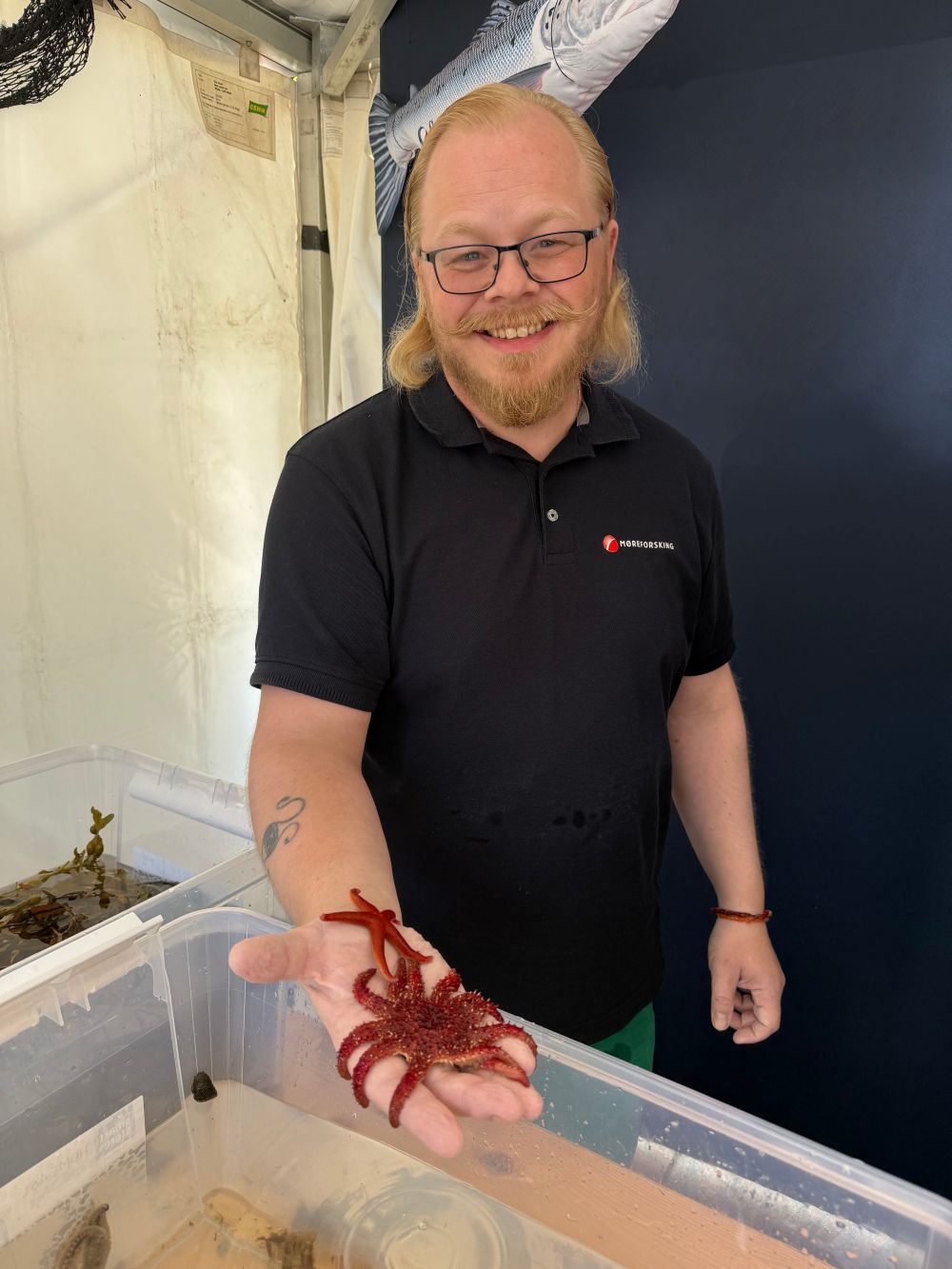
Closest to us on Trond Roger Oskars’ hand is a common sunstar, (crossaster papposus). Behind that is a blood star.

iNaturalist is a site for hobbyists, but its structure is built for scientific contribution. When a species identification receives enough consensus, it’s marked as ‘research grade’ and automatically added to the Global Biodiversity Information Facility (GBIF)  — one of the world’s largest public biodiversity databases.

In other words, what begins as a casual photo taken by a diver or beachgoer can end up as a verified datapoint in an international repository. This is social media acting not just as a tool for research dissemination, but as scientific infrastructure.

For Trond Roger Oskars of the Møreforsking Institute in Norway, the effects are clear in practice: “Recreational  divers are essential for documenting rare species — they often send me images or specimens that I wouldn’t encounter otherwise. If they didn’t go around photographing every small thing, I don’t think the marine field would move forward,” he says.

Trond Roger Oskars’ own research on snails has led to major taxonomic revisions.

The collaborative verification model of iNaturalist makes it possible to integrate contributions from non-researchers into formal science, in near real time.

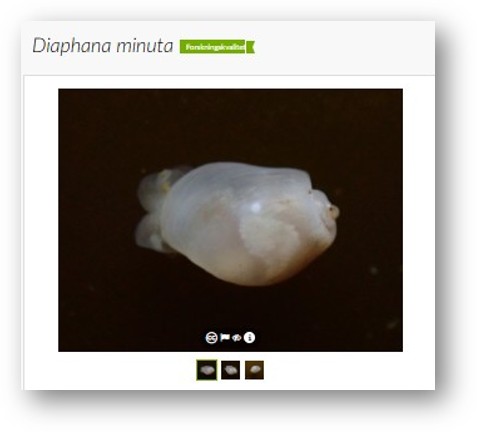
This is most likely a Diaphana minuta, a species of gastropod found in Europe and North America…

The platform also supports open content use. “I use iNaturalist to get images. Most of the images that are uploaded there are in the public space, or CC BY 4.0,” Trond Roger Oskars says. This makes the platform a valuable source for visual material for presentations, outreach posts, and educational content.

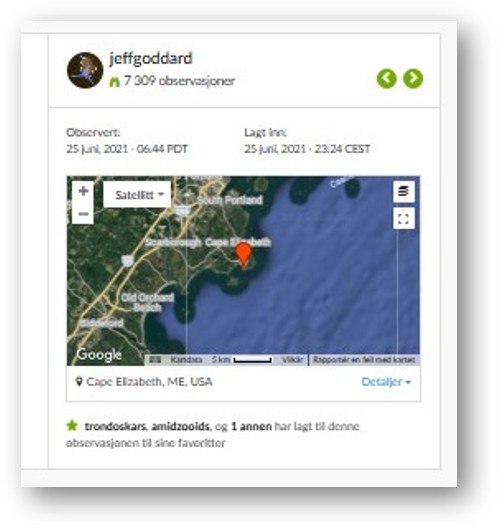
…in this case it was observed by someone off the coast of the US.

What sets iNaturalist apart is how it combines structured data collection with community input — making it both a crowdsourced field tool and a global biodiversity hub. Scientists in remote or underfunded areas, or those working in highly specific taxonomies, can gain access to a distributed community of identifiers and observers.

As a niche medium, iNaturalist, does extremely well what mainstream social media like LinkedIn and Facebook only do well with their Groups functionality, with separated private or semi-private communities based on shared interests. What separates a niche platform like iNaturalist from the Group communities of mainstream social media, is that it is solely focused on what users are on the platform are there to do, with no distractions from newsfeeds cluttered by advertising and influencer content.

Trond Roger Oskars is also active on two Facebook Groups where people upload images, one focused on marine invertebrates, one focused specifically on sea slugs.

iNaturalist and these two Facebook Groups are a supplement to the traditional dive books – printed guides used by recreational divers to help identify marine species in specific diving regions.

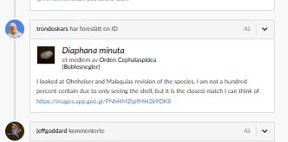
…then experts like Trond Roger Oskars helped identify it.

“Usually a diver has just clicked a picture and doesn’t know what species it. So people usually just tag me directly in the groups. They get to learn something new and engage more closely to nature so that’s a bit of fun. A lot of the old dive books are now obsolete. So they have to go to social media to get a correct image, and people are happy that there’s someone that can answer, “ says Trond Roger Oskars. The largest Facebook Group has 60,000 members and includes both diverse scientists, and people who just like the images.

Both iNaturalist  and Facebook groups like this one for sea slug enthusiasts have turned into networks that connect scientists, to divers, to wider publics, according to Trond Roger Oskars.

“It’s really great that they have brought both the people with the specialized expertise and the people with the hands-on experience together.”

Social media for research impact is a new book by Mike Young and Marcel Bogers (forthcoming). It invites you to think more clearly — and ethically — about how to use social media. Not just to disseminate your research, but to connect, ideate, co-create, and stay open to the unexpected. The book page is here.