How a glaciology paper got pulled into the climate wars — and what you can learn from research that went viral for all the wrong reasons
I talked to Julia Andreasen while doing research for our book ‘Social Media for Research Impact’ which I wrote with Marcel Bogers (released by Routledge in January 2026).
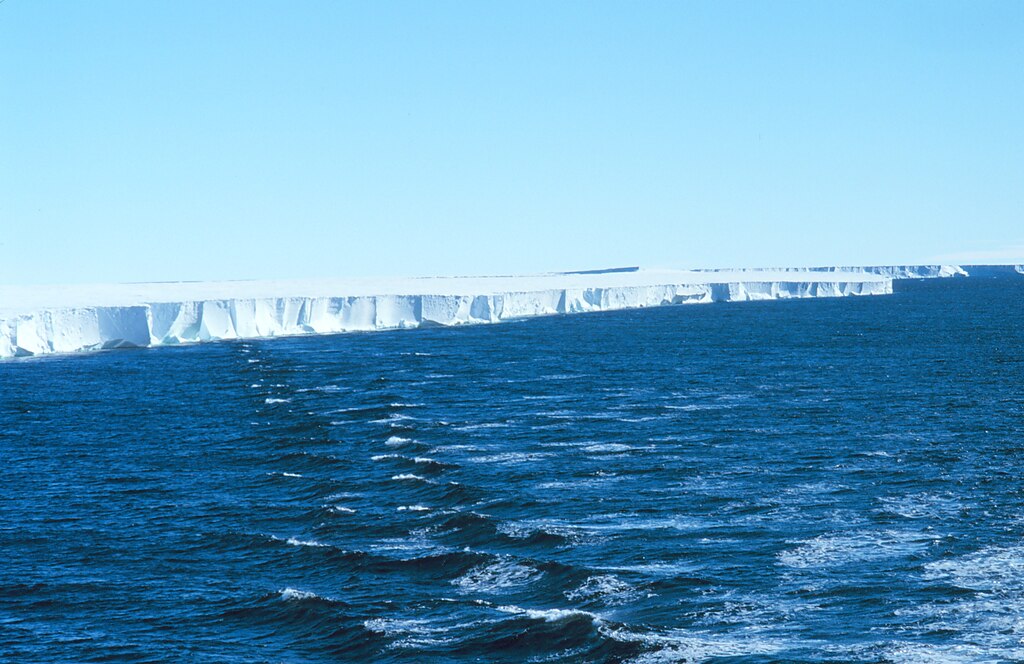
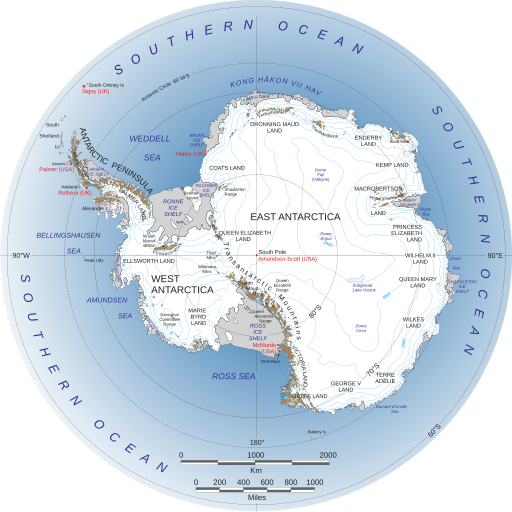
Julia, who is now a postdoc at the International Arctic Research Center, University of Alaska Fairbanks, co-authored a paper in The Cryosphere in 2023 showing that more Antarctic ice shelves had grown than retreated between 2009 and 2019. It was a small, careful study, meant to fill a narrow data gap, and based on work she and her co-authors (Anna Hogg and Heather Selley) did during her master’s. But it got swept up in the larger climate debate after a single sentence from the abstract was lifted out of context and reframed by climate skeptics as evidence against global warming.
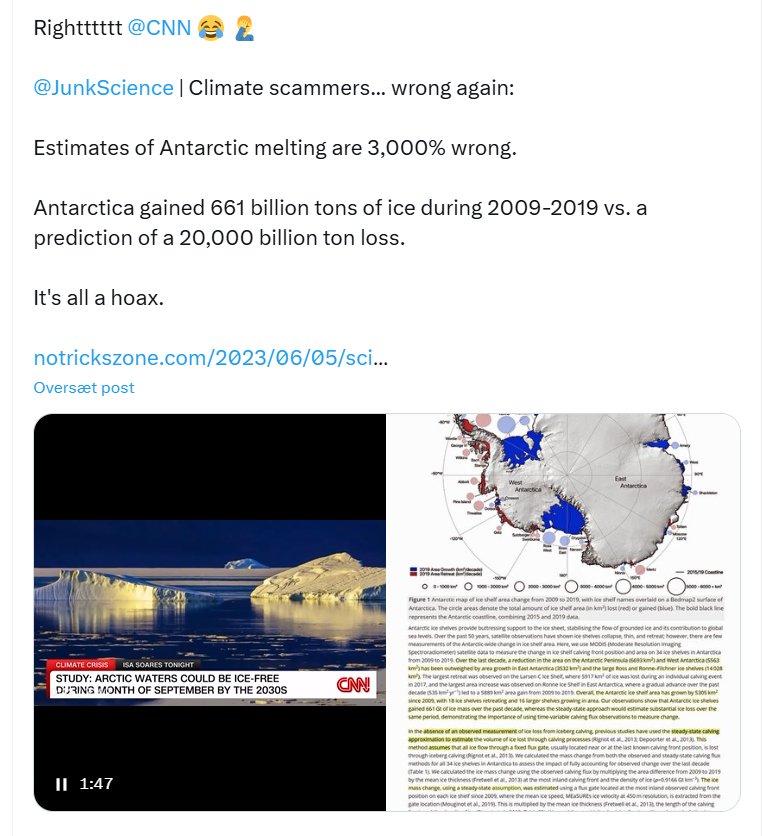
In the abstract of the paper, she and her coauthors had written that more ice shelves were advancing than retreating in the period they studied. It was a descriptive observation, not a climate claim. But the sentence was seized upon by climate change skeptics.
Just to be clear: Ice shelves float on the ocean and respond quickly to winds, snowfall, and iceberg calving. Ice sheets, by contrast, are grounded ice that can melt due to climate change and raise sea levels. On Twitter (now X), the distinction between the two terms got blurred. ‘Shelf’ became ‘sheet’. A carefully worded scientific paper became a talking point in a viral pile-on.
“We are trying to understand climate change, but not everything that we discover is necessarily going to directly equate to climate change as we are looking at a short snapshot. In one way, this is what makes the field so interesting in the first place,” says Julia Andreasen.
She recalls the moment the online storm hit her personally: “I was in the car on the way home from a memorial service… and I just started getting pings and pings and pings.”
If there were actual questions to our study, then I did reply, but I would never hear anything back
Julia Andreasen
Tweets and notifications then spilled over into emails asking for answers. Julia tried to stay away from X, “but on email… if there were actual questions to our study, then I did reply, but I would never hear anything back,” she says.
On social media, “a master’s student I don’t know personally went to bat for me, like he was defending our team and replying to so many of the tweets and getting into the arguments online. I remember messaging him and telling him that what he was doing was so kind,” Julia recalls.
Their small-scale study of a narrow data gap was, for a short moment, the focus of controversy on climate change.
In our book we refer to the term ‘context collapse’ when a social media post that was originally intended for a specific audience is exposed to other unintended audiences. It leads to misinterpretations when the context — or background knowledge — doesn’t travel with the shared post or image.
Knowing that this happens, trolls or campaigners who have particular political agendas, may use this phenomenon to deliberately share texts or images in their context to forward a particular agenda. They typically monitor social media posts or new papers for combinations of keywords — and then have a social media routine where they respond to, and share posts with these keywords in their context for the purpose of ‘owning’ a debate on a social media platform.
I truly thought that I was the only person to ever experience this. I felt like they were using me as a way to say that climate change isn’t real
Julia Andreasen
Context collapse can happen in any field, but deliberate manipulation happens typically in politicized fields (like glaciology in a climate change context). Julia’s study may have been the victim of this.
So what happened?
At the height of all the tweets and replies, Julia was doing her preliminary exams for her PhD. Luckily, her supervisor explained to the committee what was going on, and this in itself became the subject of discussion.
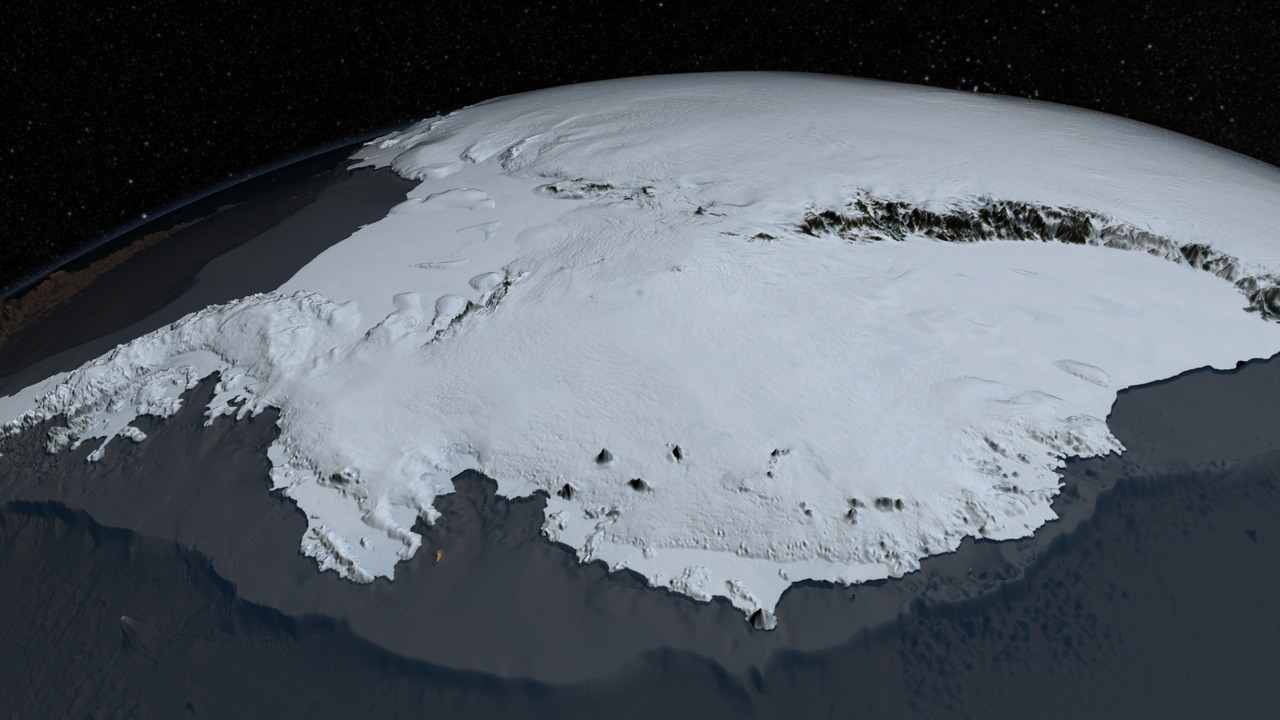
Other, more seasoned, scientists also chipped in around this time with the advice that Julia should focus on her upcoming field work and not to let herself get sucked into “this sort of black hole that the internet has created,” she says.
“I truly thought that I was the only person to ever experience this. I felt like they were using me as a way to say that climate change isn’t real. And that felt pretty awful. I didn’t feel like I had any voice and so I felt very small compared to the loud voices in the space.”
“But everyone in our community was supportive. And I think that was that really was revealed to me when fact check articles came out, because there were other scientists in my community responding to that and providing additional information.”
After a while, of course, the whole outburst of controversy died down as these things do. It is impossible to gauge its effect, if any. No-one knows whether the storm on X ever really moved anyone towards climate skepticism or whether it just made the critical tweeters look naive. The only thing we know is that original article was recognized by science news site Carbon Brief as having the highest Altmetrics score ever among their climate paper reviews. Altmetrics track how research is shared and discussed online.
The paper’s high score is likely a result of the controversy. If anything, it might have incited curiosity for the science behind glaciology among those who are genuinely interested.
Julia Andreasen has written up her recommendations so that other scientists can prepare in an article in EOS which can be read here.
Julia Andreasen’s advice:
- Anticipate potential misunderstandings or deliberate misinterpretations in article abstracts.
To me she says “I think I would frame it differently now. I would add a sentence right up in the abstract like: ‘This does not provide a basis for conclusions about climate change.'”
We are told to just grind out the science, and … leave it to others to make it accessible. But I feel there needs to be more education for the cases where science jumps over the line
Julia Andreasen
“We have figures in there showing all the different ice patterns that we’ve defined. And so I, in another world, would have said ‘we found six different patterns of ice growth and retreat’ and that’s it. And nothing about how many are growing versus how many are retreating. Or if we had put that in there, maybe say, however, this does not say anything definitive about climate change.”
This small addition could have helped set expectations for anyone reading with curiosity—or for journalists scanning for headlines, she says.
- Only selectively debate with deliberate misinformers—not all misinformation is worth addressing. Work with fact-checkers and journalists to reframe discussions instead.
This is in line with what we recommend in our book. Finding out exactly whether you are debating with people who are in good or bad faith, is the first step. In our book we propose a four-step system to adjudicate if, when, and how, to respond if you ever get into a situation like Julia Andreasen. The first step is to evaluate the critic. And not all of them are deserving of your energy.
But being selective about who you debate with, also means that you should ‘show up for your science’ in terms of news media, according to Julia Andreasen.
“My coauthors and I chose to engage with reporters who were willing to fact-check and refocus the discussion,” Julia writes in the EOS article. “Working with journalists can reframe your science in accessible language to enhance its impact and foster public understanding”.
According to Julia, scientists should not just churn out academic papers for their peers. They need to be aware of how a paper will be interpreted in a non-scientific or non-field-specific context.
“We are told to just grind out the science, and then we should leave it to others to make it accessible. But I feel there needs to be more education on our side in terms of the communication of science, just for the cases where science jumps over the line”.
Social media for research impact is a new book by Mike Young and Marcel Bogers (forthcoming January 2026). It invites you to think more clearly — and ethically — about how to use social media. Not just to disseminate your research, but to connect, ideate, co-create, and stay open to the unexpected. The book page is here.